Kimi K3.1 Pro arrives for coding agents — use the new model ID, but do not plan a local deployment yet
Moonshot's Kimi K3.1 Pro is available in Kimi Code and API products with a 1M-token context window. The coding model requires thinking mode, Highspeed consumes roughly 2× quota, and the open weights are only promised by November 4.
Moonshot released Kimi K3.1 Pro on October 23 for Kimi, Kimi Code, Kimi Work, and its API. It is a post-trained Kimi K3 variant, not a new local checkpoint you can download today. Moonshot says full weights will arrive by November 4, 2026. (Source: Moonshot technical blog, 2026-10-23)
Key facts:
- Context: K3.1 Pro supports up to 1,048,576 tokens on eligible Kimi Code plans.
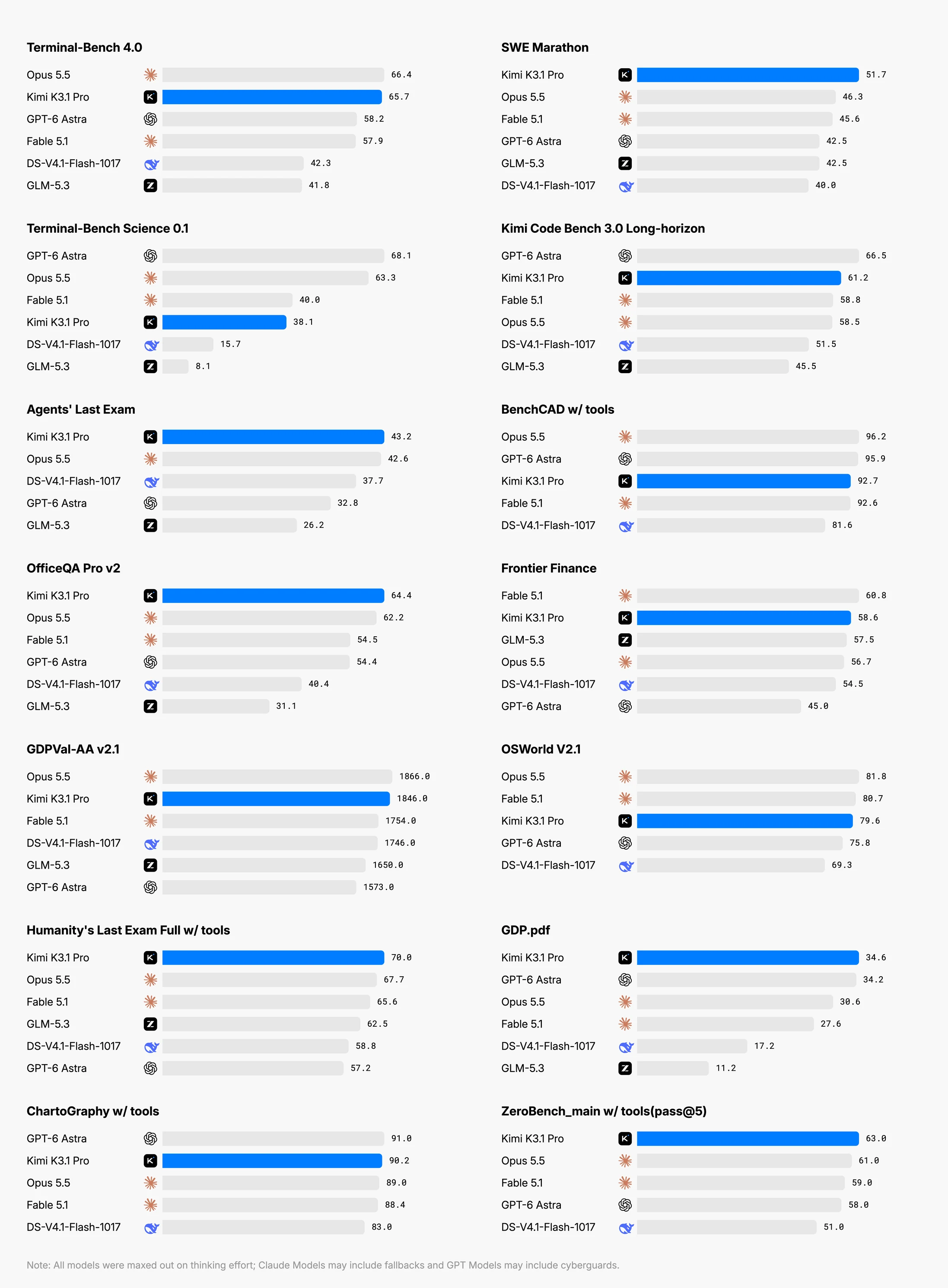
- Coding result: Moonshot reports 65.7% on Terminal-Bench 4.0, versus 66.4% for Claude Opus 5.5 in its comparison.
- Model IDs: use
k3.1-proork3.1-pro-highspeed— not the display name. - Thinking is mandatory: requests that disable thinking are rejected with HTTP 400.
- Speed trade-off: Highspeed is advertised at 2–3× output speed and about 2× quota usage.
What this means if you’re building with Kimi Code
The useful upgrade is operational, not just a leaderboard row. In Kimi Code, start a new session before switching: Moonshot says changing models or thinking effort invalidates the existing context cache. Keep the same effort through a long agent run when possible. (Source: Kimi Code model configuration, accessed 2026-10-24)
For an API-backed coding agent, target k3.1-pro and leave reasoning enabled. The official overseas Kimi Code endpoint is https://api.kimi.ai/coding/v1 for OpenAI-compatible Chat Completions and Responses calls; the Anthropic-compatible base URL is https://api.kimi.ai/coding/. Kimi Code says the native APIs are its most stable path, so proxy translation can change behaviour. (Source: Kimi Code overview, accessed 2026-10-24)
Do not accidentally benchmark the fallback. Kimi documents that a mistyped third-party model ID can fall back to K2.8 Preview without thinking. That makes the exact k3.1-pro spelling part of deployment verification, alongside logging the returned model name and first-token latency.
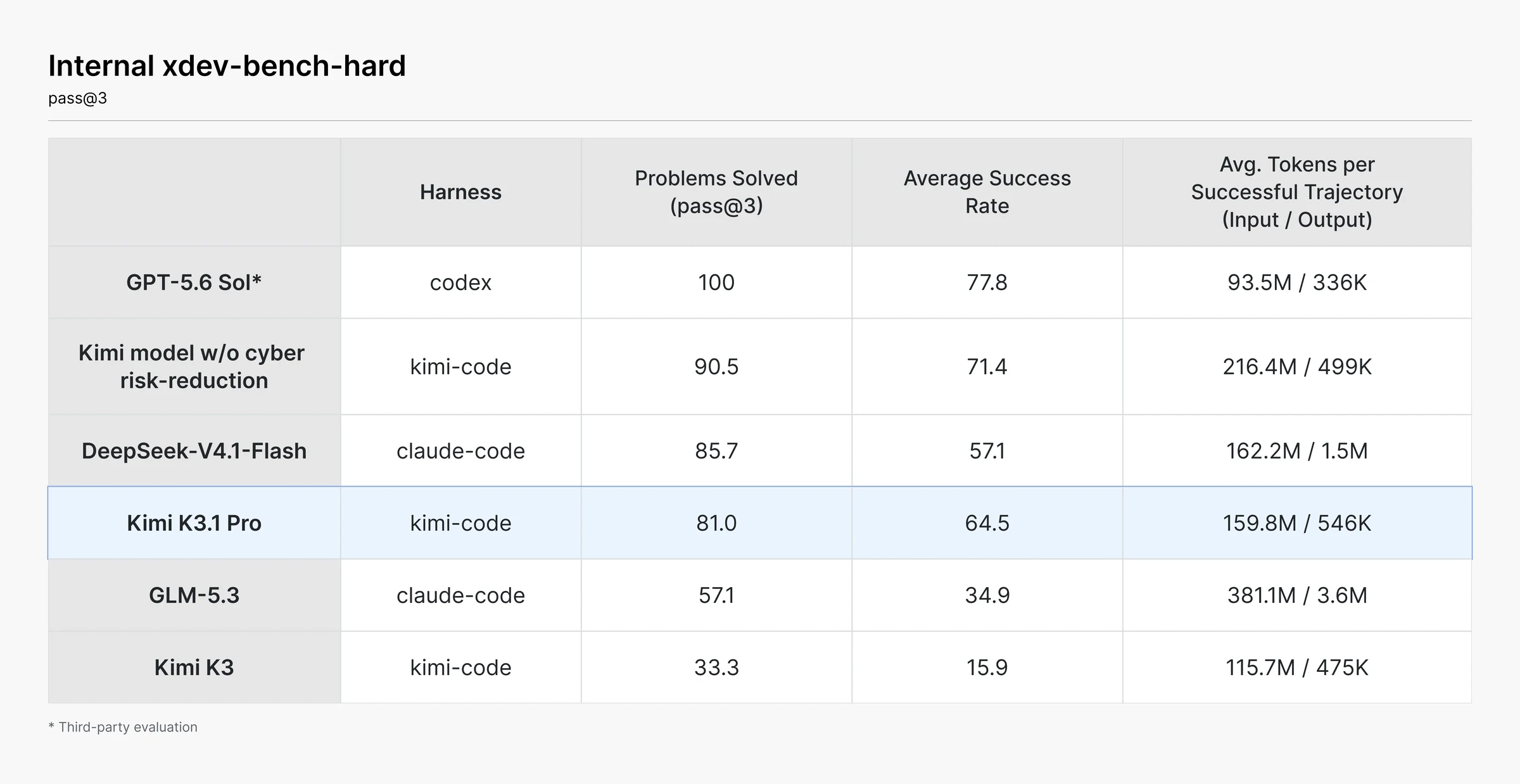
The practical constraint is still hardware. The release is available through hosted products now; it does not make K3.1 Pro locally runnable today. Keep K3.1 behind a model configuration flag until the promised weights, license, formats, and serving recipes actually ship. If you need a model you can self-host now, use the existing Kimi K3 access and deployment guide for its current constraints, or the Qwen 3.6 local coding setup for a smaller local route.
Sources: Moonshot technical blog · Kimi Code model configuration · Kimi Code API overview · Vercel AI Gateway announcement