All money pages, every release
All tutorials
-
Fix llama-server Connection Refused, 503, and 404 Errors
Find which layer is failing before changing your model: test the listener, health endpoint, API route, and Docker network with a short diagnostic checklist.
-
How to Serve Qwen3.8-Flash-Next with vLLM: Hardware, FP8 and 262K Context
Qwen3.8-Flash-Next activates 6B parameters per token, but the open checkpoint is still a 176B-parameter deployment. Use the official vLLM recipe to choose FP8, tensor parallelism, CPU offload, context length, and an OpenAI-compatible endpoint without confusing active compute with memory capacity.
-
How to Run llama-server for Multiple Users: Parallel Slots, Continuous Batching, and Metrics
Configure llama-server for concurrent users with --parallel, continuous batching, prompt caching, slot monitoring, Prometheus metrics, and a repeatable load test.
-
llama-server Built-in Tools: Safe --tools all Setup with Docker
Use llama-server --tools all safely with a local GGUF. Set up read-only tools, Docker isolation via --tools-runtime, Web UI testing, and security guardrails.
-
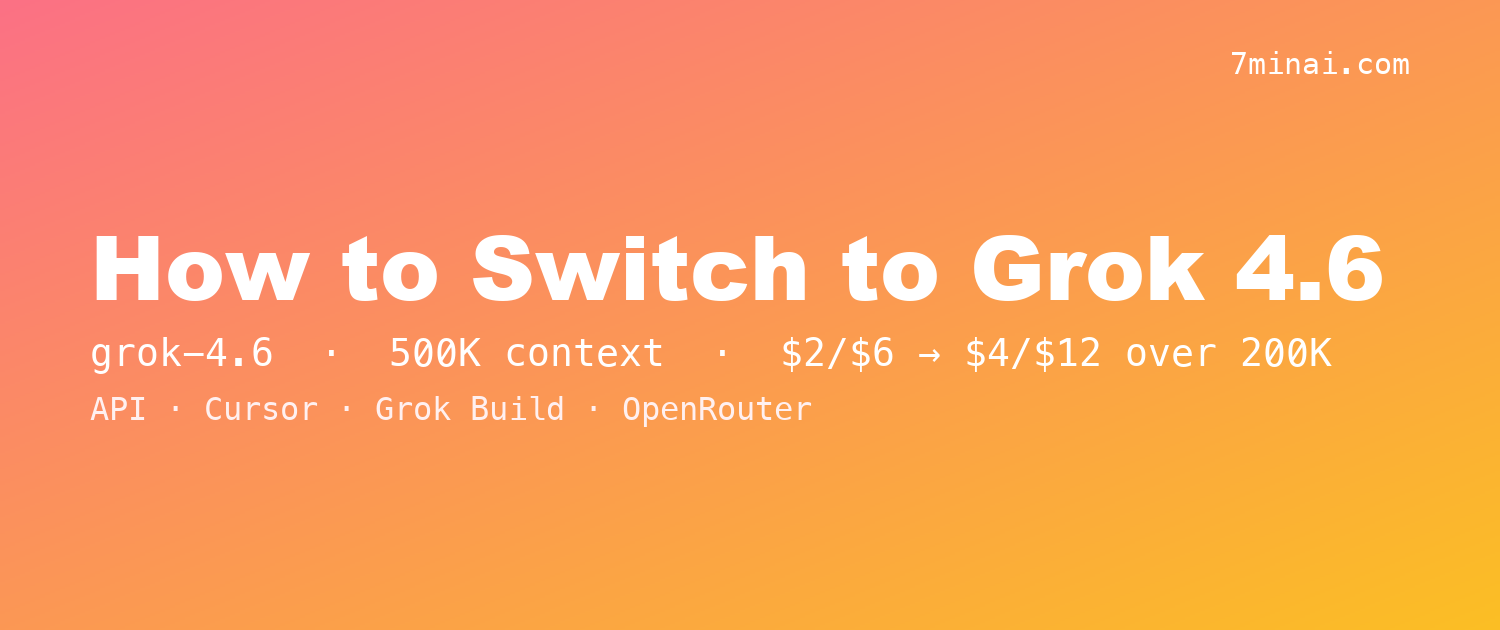
How to Switch to Grok 4.6 in the API, Cursor & Grok Build
Grok 4.6 shipped August 12, 2026 at the same $2/$6 base price as Grok 4.5, with a five-point jump on the Artificial Analysis Intelligence Index. Here's the exact grok-4.6 model ID, the 200K-token pricing cliff that doubles your bill, the new xhigh reasoning effort, the three parameters that stop working, and the one benchmark that says don't switch.
-
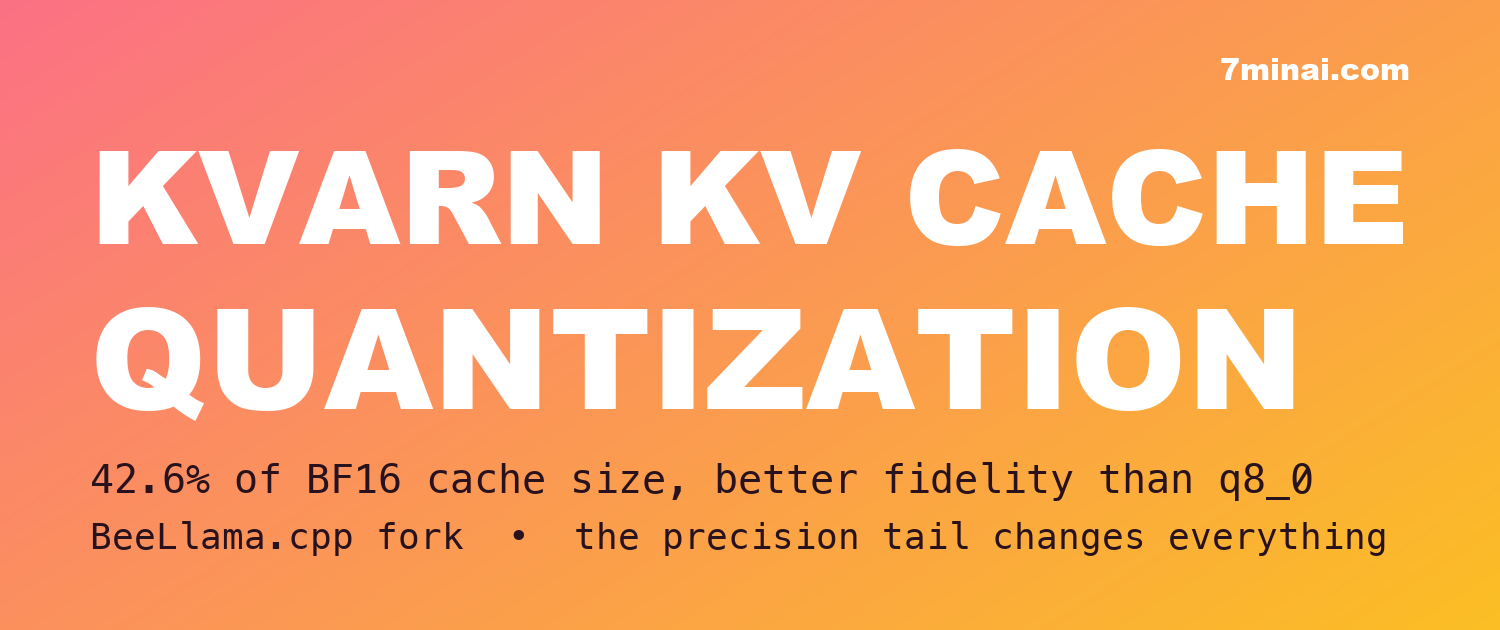
How to use KVarN KV cache quantization in BeeLlama.cpp
KVarN is a variance-normalized KV cache quantization in BeeLlama.cpp, a llama.cpp fork. On Qwen 3.6 27B at 64K context, kvarn6 with a 1024-token precision tail measures 0.000879 median KLD at 42.6% of BF16 cache size — better fidelity than q8_0 at 53.1%. Here is how to install it, which preset to pick for your VRAM, how to verify it actually applied, and the one model family where you should not use it.
-

How to Run Muse Glimmer 30B Locally: Ollama, llama.cpp, and vLLM
Meta's Muse Glimmer 30B is Apache 2.0, fits in 16 GB at Q4, and is built for agent loops that never touch the network. This guide covers every runtime path, the quant table that actually matters, the reasoning-strength control most guides miss, and where the model is genuinely weaker than Qwen3.6-27B.
-
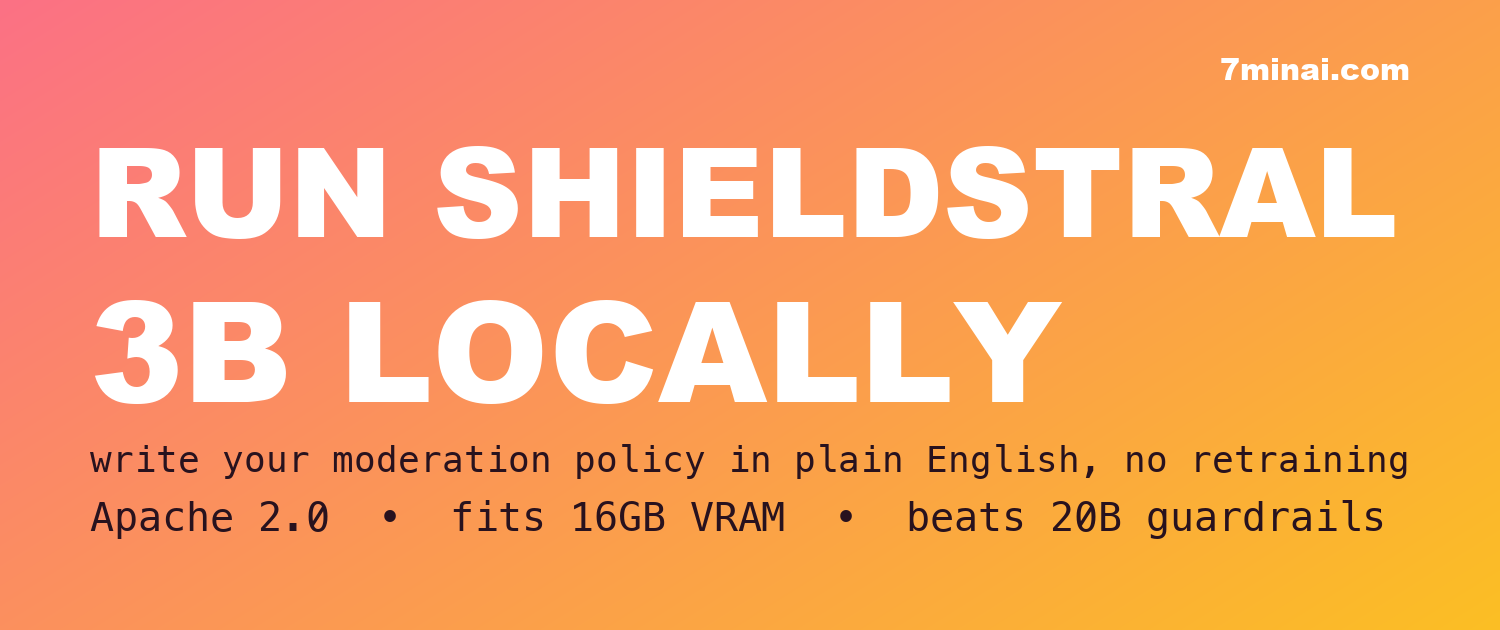
How to Run Shieldstral 1.0 3B Locally (the Policy-Adaptive Moderation Model You Write in Plain English)
Mistral's Shieldstral 1.0 3B is an Apache-2.0 multimodal safety classifier that takes your moderation policy as a natural-language yes/no question at inference time — no retraining, no fixed category list. It fits in 16GB of VRAM, answers in a single forward pass, and beats GPT-OSS-Safeguard-20B and LlamaGuard-4-12B on several benchmarks despite being 3B. This guide covers the vLLM and llama.cpp setups, the exact prompt structure it expects, how to turn its single yes/no token into a continuous score you can threshold, and the prompt-engineering rules that decide whether it works.
-
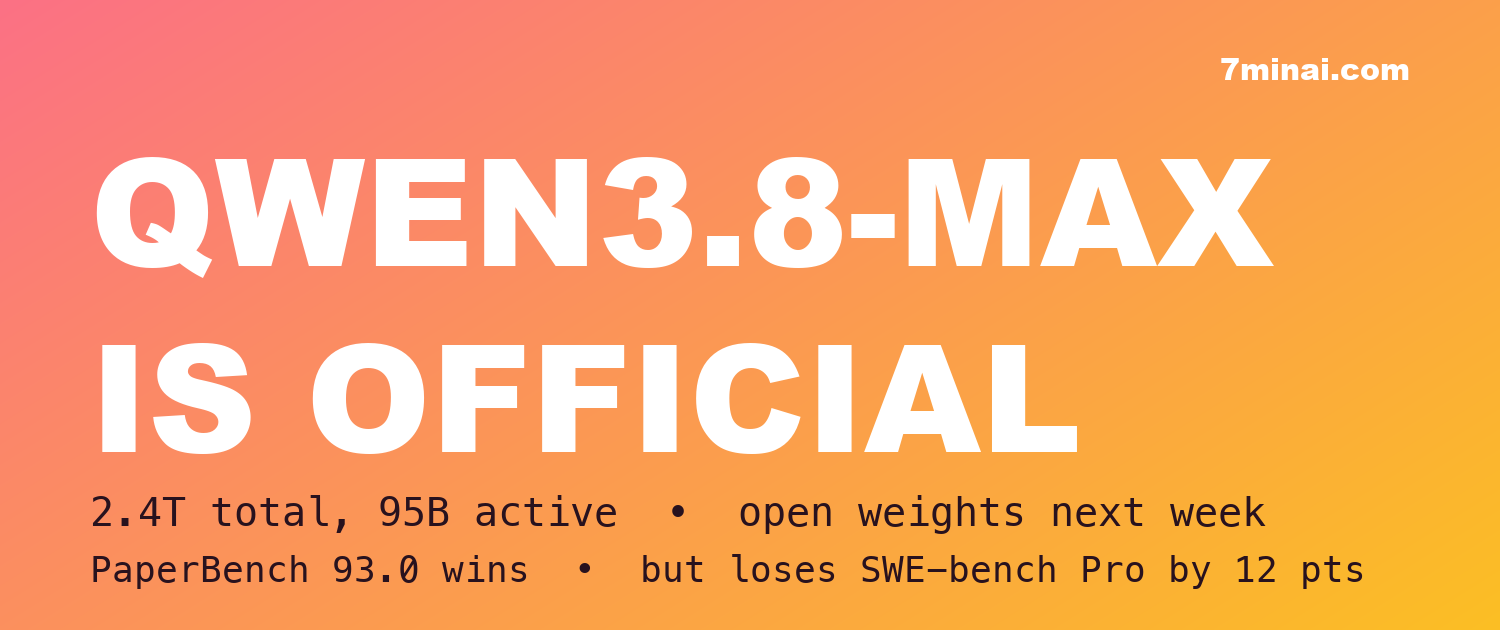
Qwen3.8-Max Is Official: 95B Active, Open Weights Next Week — and Where It Actually Wins
Alibaba officially launched Qwen3.8-Max on August 3, 2026, finally disclosing the number that was missing from the July preview: 2.4T total parameters with 95B active. It's also the first Qwen-Max-class model to get open weights, shipping next week. But its own benchmark table tells a more nuanced story than the headlines — it tops PaperBench at 93.0 and beats Opus 4.8 on FrontierSWE, while losing Terminal-Bench to GPT-5.6 Sol and SWE-bench Pro to Fable 5. Here's the full table, the test conditions, and an honest read.
-
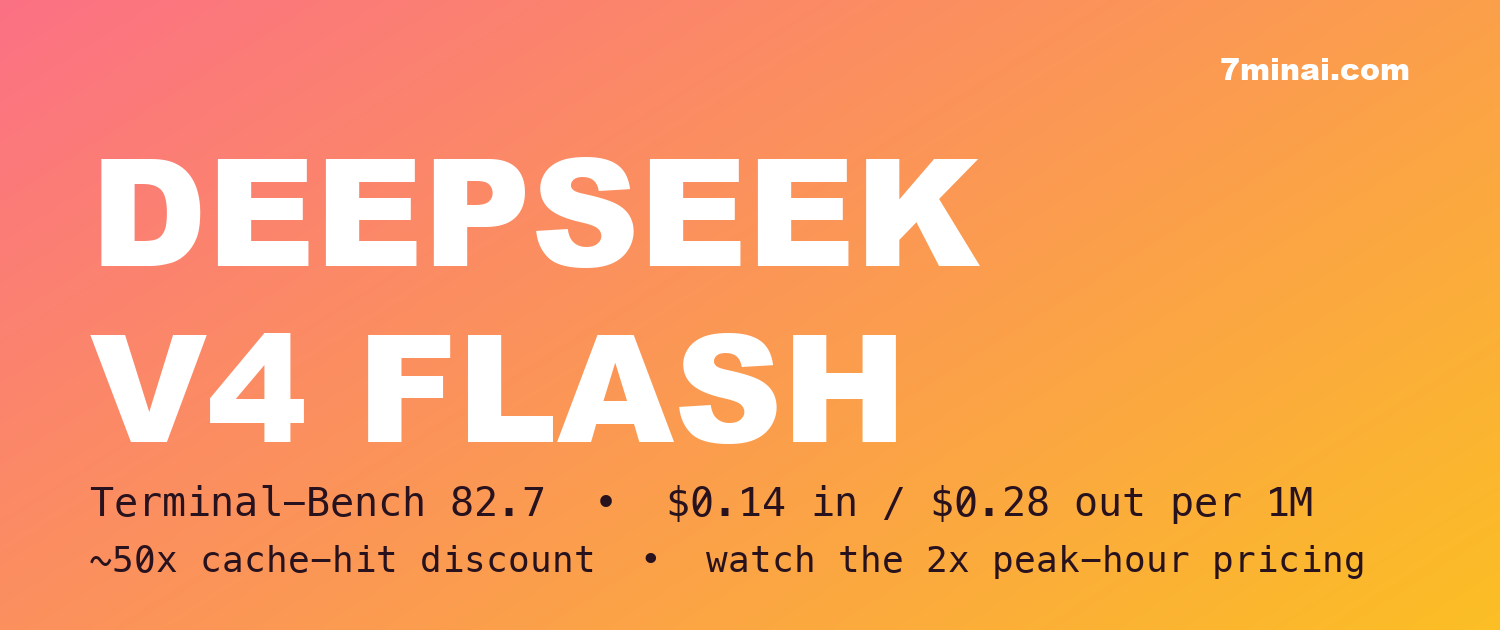
How to Use DeepSeek V4 Flash (82.7 Terminal-Bench at $0.14/$0.28 per 1M)
DeepSeek V4 Flash went to official public beta on July 31, 2026 with agent benchmarks that beat V4-Pro-Preview — Terminal Bench 2.1 82.7, DeepSWE 54.4, NL2Repo 54.2 — while costing $0.14 in / $0.28 out per 1M tokens, roughly 3x cheaper than V4-Pro. This guide covers the model id, the OpenAI and Anthropic base URLs, the Responses API + Codex adaptation (Flash only), the 50x cache-hit discount worth restructuring prompts for, and the peak-hour 2x pricing change you need to plan around.
-
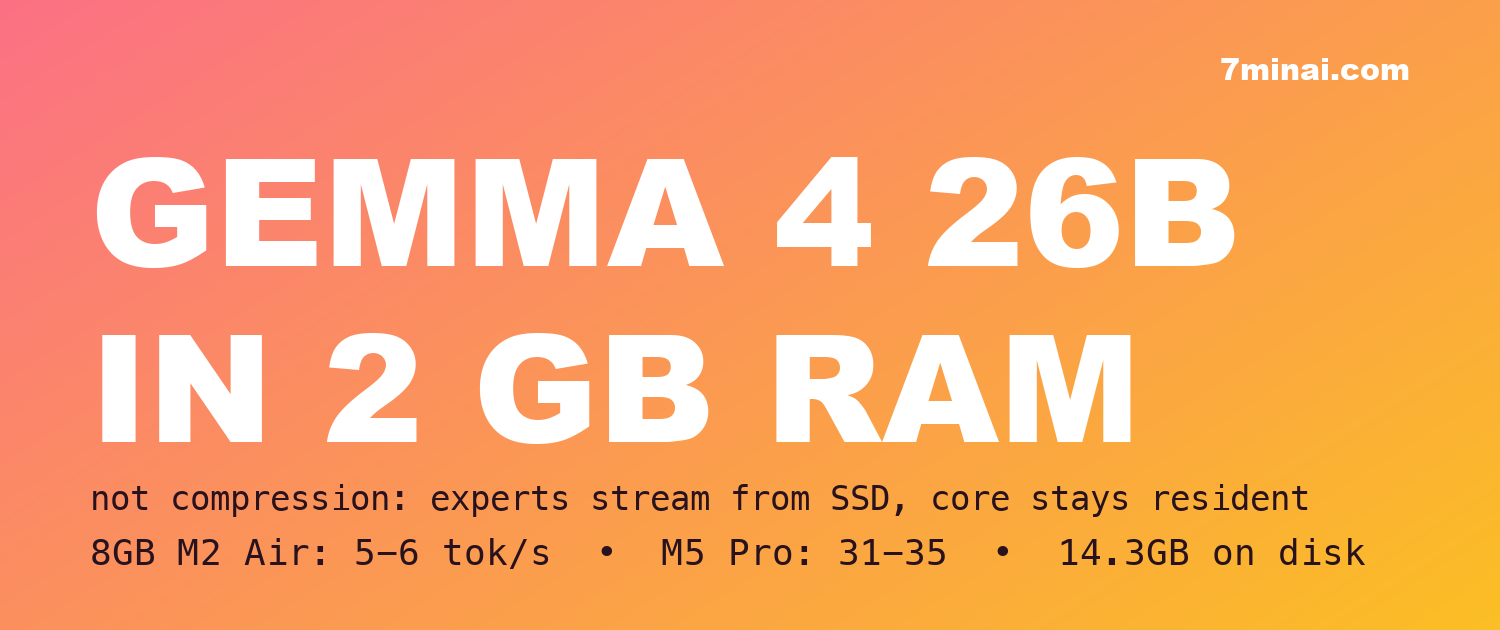
How to Run Gemma 4 26B in ~2 GB of RAM (TurboFieldfare on Apple Silicon)
TurboFieldfare runs Gemma 4 26B-A4B on an 8 GB MacBook Air using about 2 GB of RAM — not by compressing the model, but by keeping the 1.35 GB shared core resident and streaming each token's experts from SSD. This guide explains how that actually works, the honest trade (14.3 GB of disk, macOS 26 + Metal 4, 5-6 tok/s on an M2 vs 31-35 on an M5), and the exact commands for the Mac app, the CLI, and the loopback OpenAI-compatible server.
-
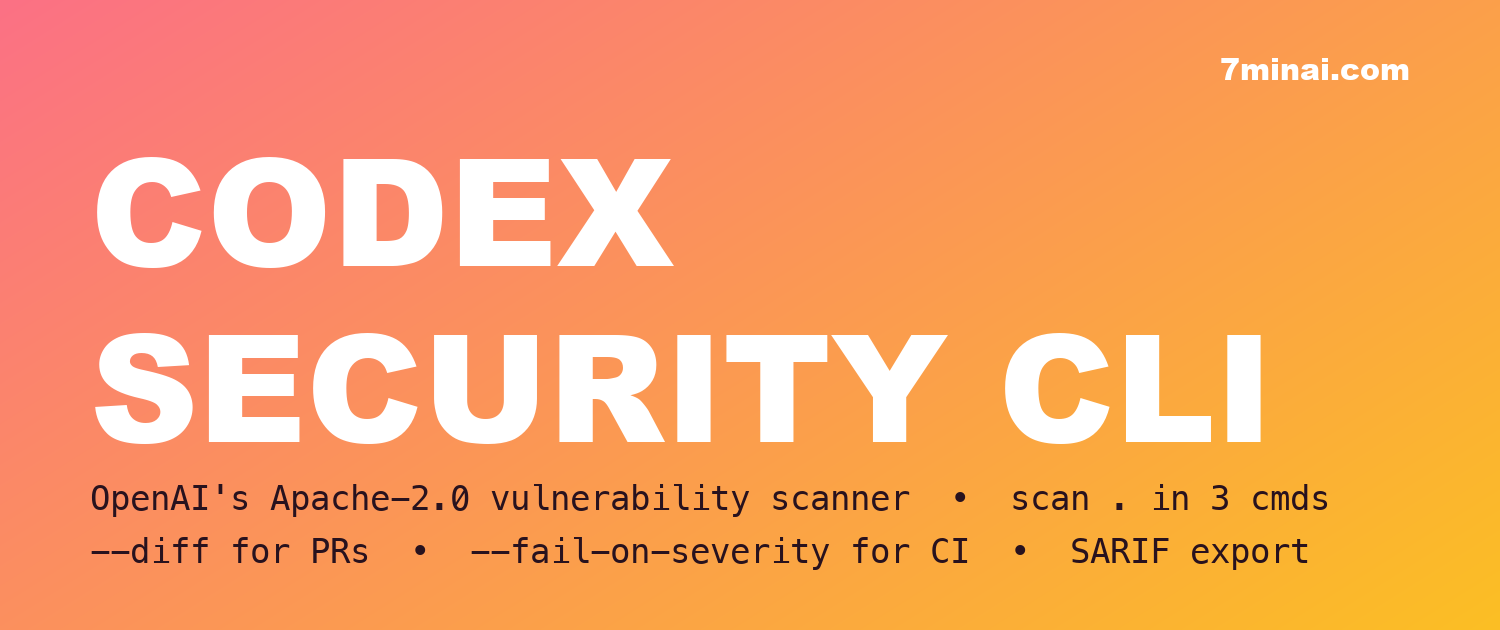
How to Use Codex Security (OpenAI's Open-Source Vulnerability Scanner CLI)
OpenAI shipped @openai/codex-security — an Apache-2.0 CLI and TypeScript SDK that scans your repo for vulnerabilities, validates findings, patches them, and gates CI. This guide covers the three-command quick start, the auth choices (ChatGPT sign-in vs OPENAI_API_KEY), scoping scans with --path / --diff / --working-tree, deep mode, the pre-commit hook, cost caps with --max-cost-usd, SARIF export, and the CI recipe — including the exit-code detail that decides whether your pipeline can trust a green build.
-
How to Run Kimi K3 Locally (2.8T Open Weights, 104B Active, Native MXFP4)
Moonshot released Kimi K3's open weights — 2.8T total / 104B active MoE, 896 experts with 16 selected per token, 93 layers of KDA + Gated MLA attention, a 1M context, and native MXFP4 quantization trained in from the SFT stage. This guide covers what actually shipped (96 safetensors shards under a custom Kimi K3 license), the officially recommended engines (vLLM, SGLang, TokenSpeed), the honest hardware reality, the API fallback — and the preserved-thinking gotcha that silently breaks multi-turn and tool calls if you don't pass reasoning_content back.
-
Grok Build CLI: Install, Commands, and config.toml (the Practical Handbook)
The hands-on manual for xAI's grok CLI — installing a specific version (not just the latest), grok update, the slash commands that matter (/context, /compact, /fork, /rewind, /resume), where config.toml lives and the settings worth changing, and the full headless flag table for CI (-p, --output-format json, --max-turns, --allow/--deny, --sandbox). Every command is quoted from xAI's official user guide in the open-source repo.
-
How to Write a Claude Skill (the Progressive-Disclosure Way Anthropic Now Recommends)
Anthropic's new context-engineering guidance says to stop stuffing CLAUDE.md and move situational instructions into skills — but the docs don't spell out how skills actually load. This guide covers the real mechanics: the SKILL.md frontmatter (name and description are the only required fields, and description is what decides whether your skill ever fires), the three-layer progressive-disclosure model that keeps skills nearly free until used, where to put them (~/.claude/skills/<name>/SKILL.md vs project .claude/skills/), how to split long skills across files, and how to write a description that reliably triggers.
-
The New Rules of Context Engineering for Claude 5 Models (What to Delete From Your CLAUDE.md)
Anthropic removed over 80% of Claude Code's system prompt for Claude Opus 5 and Fable 5 with no measurable loss on coding evals — and published the new rules behind that. The practices that helped older models (strict rules, few-shot examples in tool descriptions, comprehensive upfront CLAUDE.md, repeating instructions for emphasis) now actively hurt. This guide covers all six shifts, what to delete, what to keep, how to use progressive disclosure and skills, and the /doctor command that rightsizes your setup.
-

How to Switch to Claude Opus 5 in Cursor, Claude Code & the API
Claude Opus 5 shipped July 24, 2026 at the same $5/$25 price as Opus 4.8. Here's how to enable it everywhere — the exact claude-opus-5 model ID, the Claude Code and Cursor steps, the Bedrock/Vertex strings, the effort default, and the silent Opus 4.8 fallback on flagged requests that trips up security tooling.
-
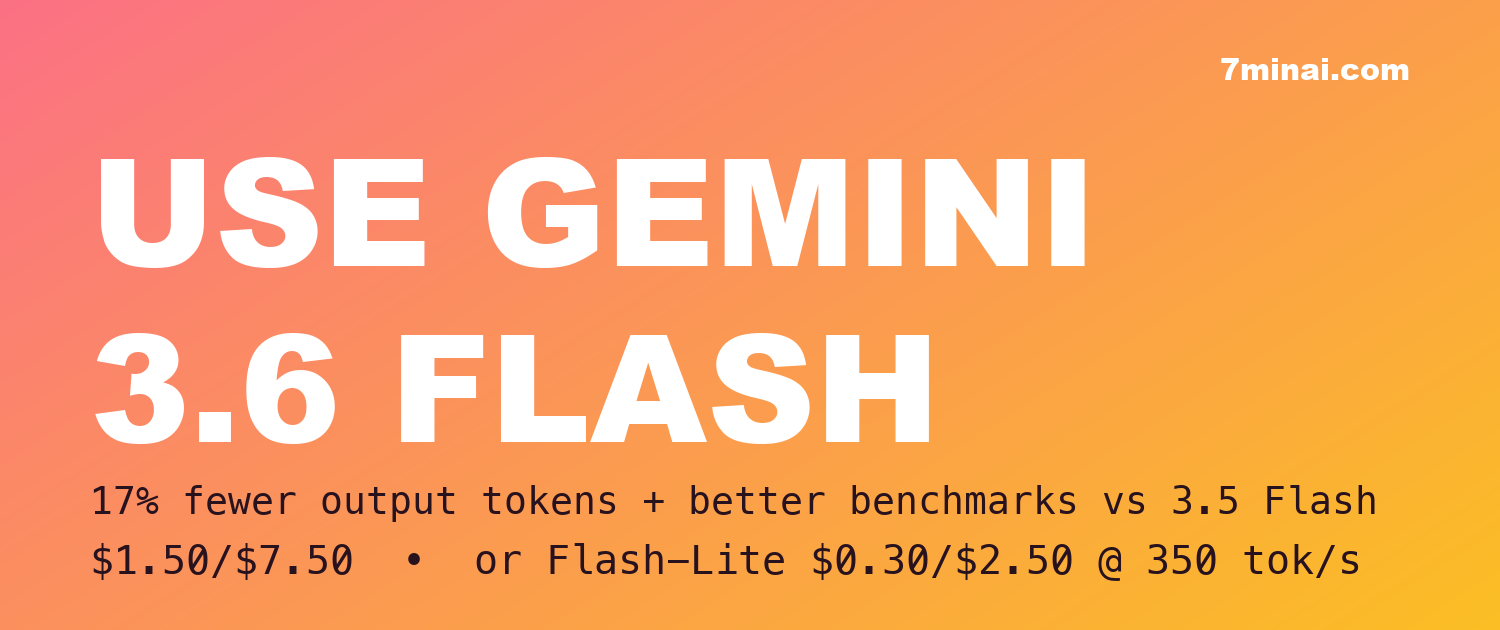
How to Use Gemini 3.6 Flash (and When to Pick Flash-Lite Instead)
Google shipped three Flash models on July 21, 2026: Gemini 3.6 Flash (general production — $1.50/$7.50 per 1M, 17% fewer output tokens than 3.5 Flash with real quality gains), Gemini 3.5 Flash-Lite (high-volume, $0.30/$2.50, 350 tokens/sec), and Gemini 3.5 Flash Cyber (security, gated to partners — not GA). This guide covers which model to pick, the API model ids, pricing, the efficiency and benchmark gains, where each is available, and how to switch from 3.5 Flash.
-
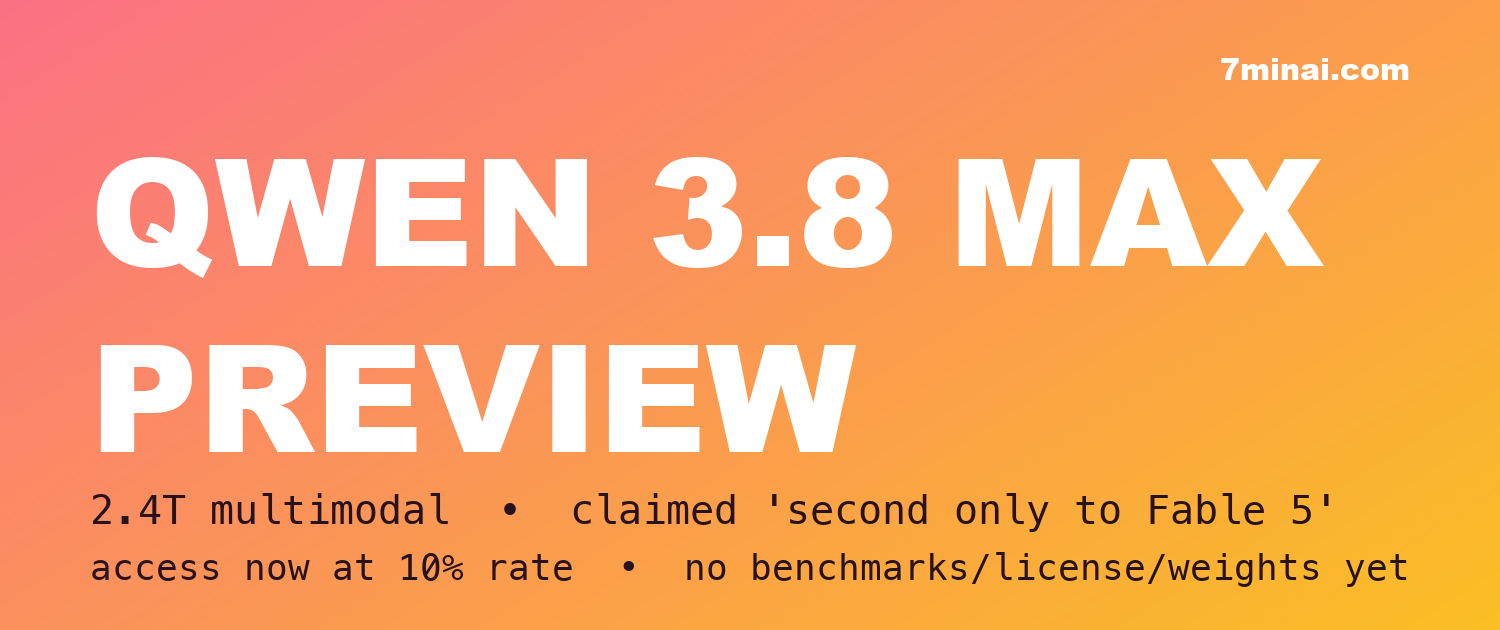
How to Access Qwen 3.8 Max Preview Today — What's Confirmed, What Alibaba Hasn't Said, and When Weights Drop
Alibaba previewed Qwen3.8-Max on July 19, 2026 — a claimed 2.4-trillion-parameter multimodal model (text, images, video, documents), positioned 'second only to Fable 5.' But it's a preview: the active-parameter count, benchmarks, license, and open-weights date are all undisclosed, and there's no HuggingFace repo yet — so you can't run it locally. This guide separates what's actually confirmed from the gaps, shows how to access the Max Preview today (Token Plan / Coder, at 10% of standard rate, OpenAI- and Anthropic-compatible), and explains why an open-weight Max flagship would matter.
-
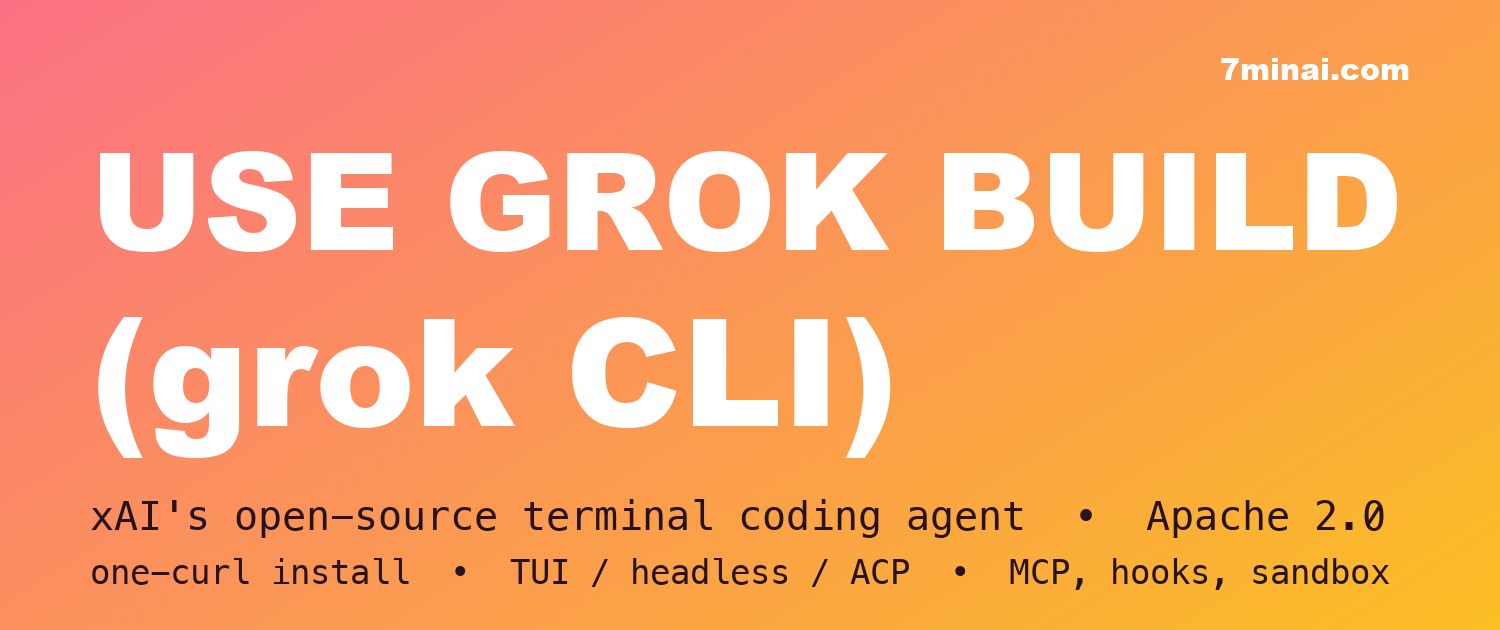
How to Use Grok Build (xAI's Open-Source Terminal Coding Agent)
xAI open-sourced Grok Build (the `grok` CLI) under Apache 2.0 — a Rust terminal coding agent that edits files, runs shell commands, searches the web, and manages long-running tasks as a full-screen TUI, headlessly for CI, or embedded in editors via the Agent Client Protocol. This guide covers installing it (one curl command), authenticating, the three run modes, the features that matter (MCP servers, skills, hooks, sandboxing), building from source, and an honest note on auditing what any AI coding CLI sends over the wire.
-
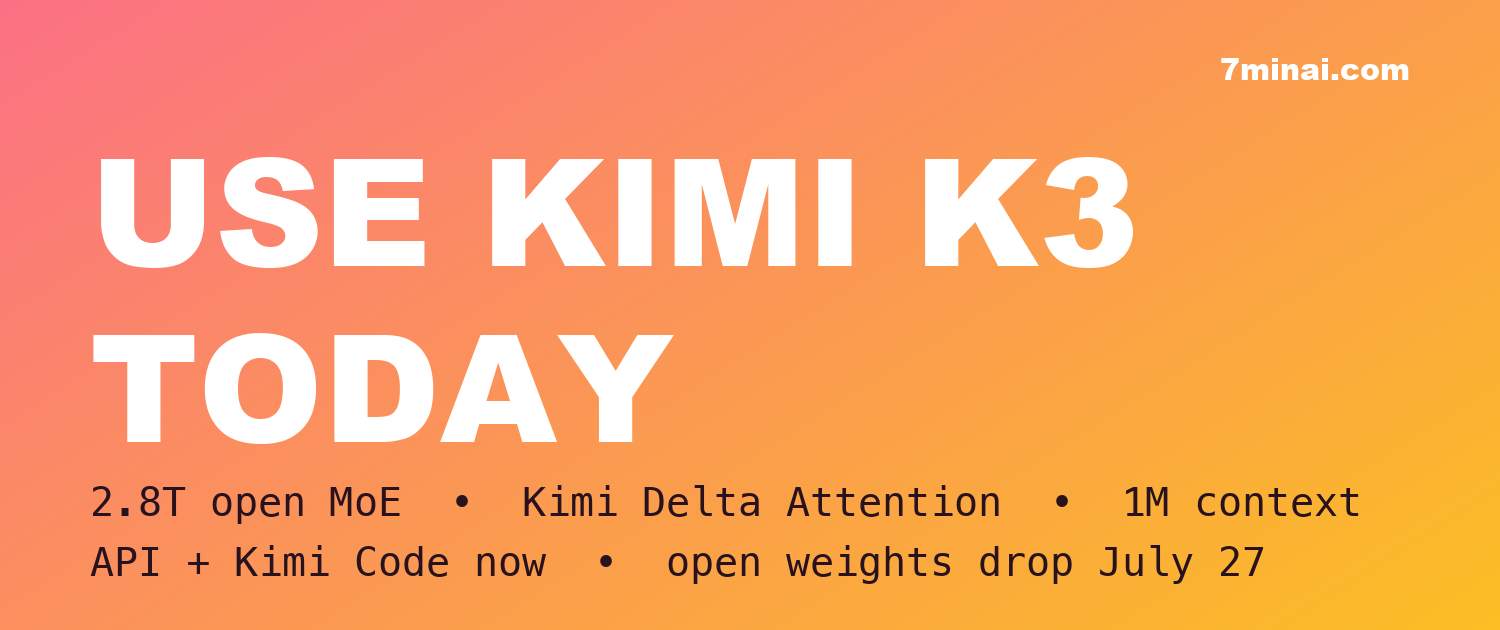
How to Use Kimi K3 Today (API + Kimi Code) — the 2.8T Open Model, Weights Dropping July 27
Moonshot's Kimi K3 launched July 16, 2026 — a 2.8-trillion-parameter open Mixture-of-Experts model with Kimi Delta Attention, a 1M-token context, and multimodal (text + image) input. The open weights don't drop until July 27, so you can't run it locally yet — but you can use it now via the Moonshot API (model id kimi-k3, OpenAI-compatible), Kimi Code, kimi.com, or OpenRouter. This guide covers exactly how to access K3 today, the pricing ($3/$15 per 1M, $0.30 cache-hit), the benchmarks, and what to expect when the weights land.
-
How to Run Inkling Locally (Thinking Machines' 975B Apache-2.0 Multimodal Model)
Inkling is Thinking Machines' new open-weights model (released July 15, 2026) — a 975B-total / 41B-active Mixture-of-Experts model under Apache 2.0, multimodal (text, vision, audio), with a 1M-token context and strong benchmarks (77.6% SWE-bench Verified, 97.1% AIME 2026). But 975B parameters means the local route is heavy: the smallest usable quant needs ~290 GB of memory. This guide gives the honest hardware reality, then the real ways to run it — llama.cpp with Unsloth's GGUF quants, the official vLLM / SGLang path, the lighter Inkling-Small (276B/12B) variant, and the hosted APIs for everyone else.
-
How to Stop Claude Overusing 'load-bearing' (and Other Filler Phrases): Steering Its Writing Style
Claude has verbal tics — 'load-bearing,' 'you're absolutely right,' 'honest take,' 'seam' — and just telling it 'stop saying load-bearing' often backfires, because naming a word makes it more salient. This guide covers what actually steers Claude's writing: few-shot examples of the voice you want (the most reliable lever, per Anthropic), Claude Code output styles and CLAUDE.md that inject tone into the system prompt every session, positive style descriptions instead of blocklists, and — as a last cosmetic resort — a post-processing hook that find-and-replaces the words on display.
-
How to Use Apple's SpeechAnalyzer (the On-Device Whisper Alternative in iOS 26 / macOS 26)
Apple's new SpeechAnalyzer + SpeechTranscriber API replaces SFSpeechRecognizer in iOS 26 and macOS 26 — fully on-device speech-to-text that, in one independent benchmark, beat Whisper Small on accuracy (2.12% vs 3.74% word error rate on clean audio) while running about 3x faster. This guide shows the real Swift flow: creating a SpeechTranscriber and SpeechAnalyzer, downloading the language model with AssetInventory, streaming audio in, and reading results — plus an honest take on when Apple's ~30 locales beat Whisper and when Whisper's 100+ languages still win.
-
How to Reduce Claude Code's Token Overhead (the 33k Before Your Prompt) — What's Real and What Caching Fixes
One measured analysis found Claude Code sends ~33,000 tokens of system prompt, tool schemas, and scaffolding before your prompt is even read — versus ~7,000 for OpenCode. About 24k of that is the 27 tool definitions. But that overhead is a stable prefix, and Claude Code automatically prompt-caches it, so you don't pay full price every turn. This guide separates the sticker number from what you actually pay, shows how to see your own breakdown with /context, and gives the real levers that reduce it: trimming CLAUDE.md, pruning MCP servers, watching subagent fan-out, and letting the cache do its job.
-
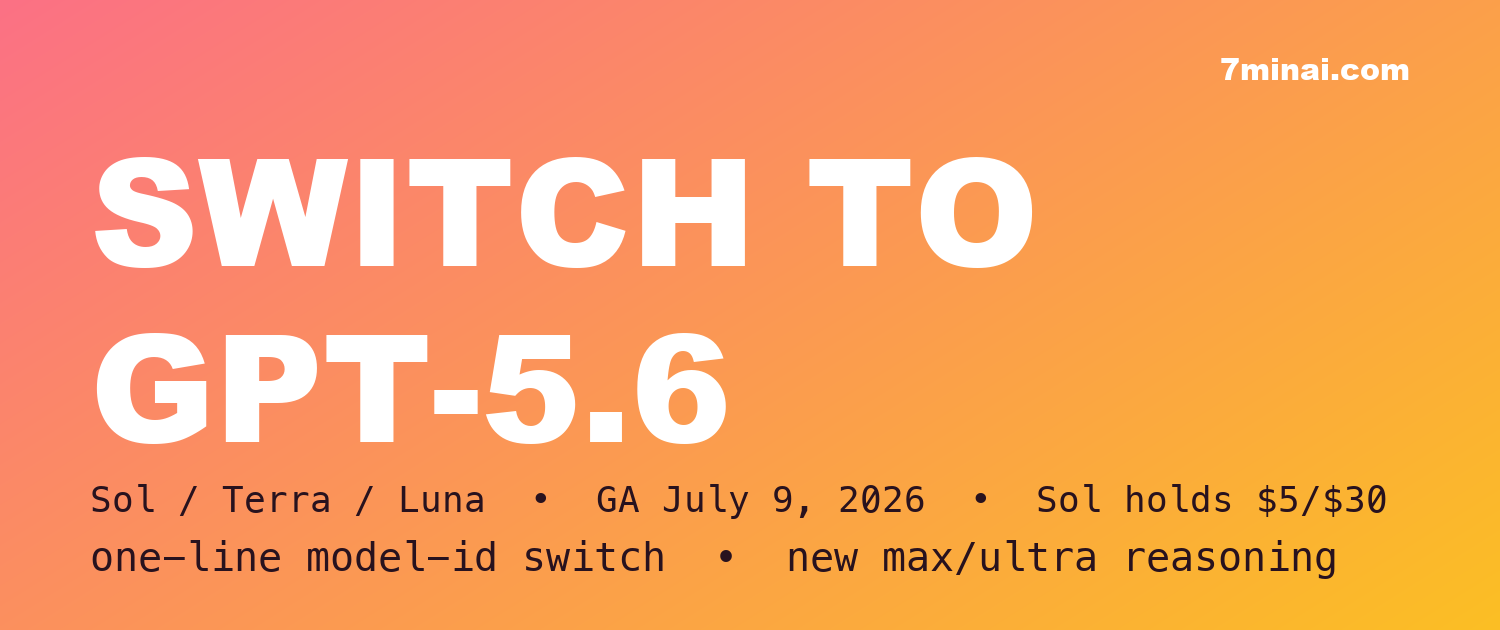
How to Switch to GPT-5.6 (Sol, Terra, Luna): Model IDs, the New max/ultra Reasoning, and the One Breaking Change
GPT-5.6 went generally available on July 9, 2026 across ChatGPT, Codex, ChatGPT Work, and the OpenAI API — as three models: Sol (flagship), Terra (balanced), and Luna (fast). Switching is mostly a one-line model-ID change: use gpt-5.6-sol, gpt-5.6-terra, gpt-5.6-luna, or the bare gpt-5.6 alias (which routes to Sol). This guide covers exactly which ID to pick, the pricing (Sol holds GPT-5.5's $5/$30), the new max and ultra reasoning-effort settings, and the one real breaking change you must handle when migrating from GPT-5.5: prompt caching now uses prompt_cache_options.ttl, and the old prompt_cache_retention field is deprecated.
-
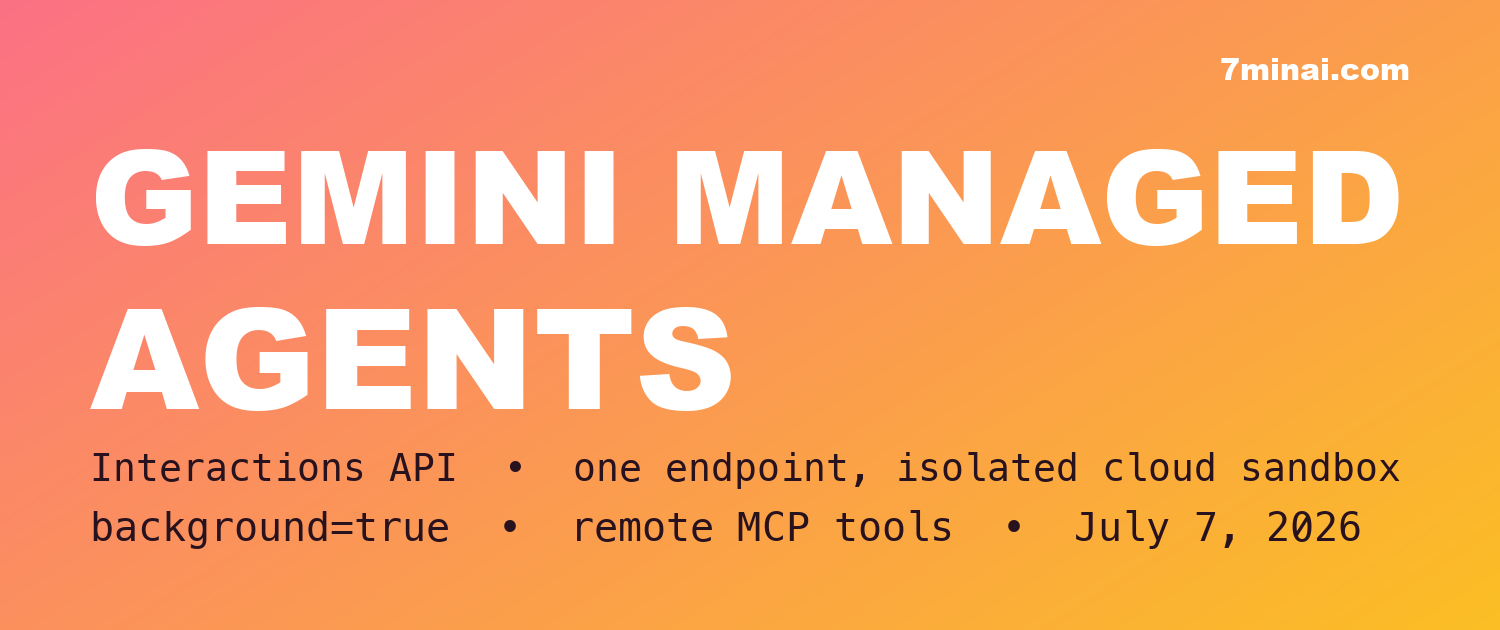
How to Use Gemini Managed Agents (Background Tasks and Remote MCP in the Interactions API)
Google's July 7, 2026 update to the Gemini Interactions API lets you run a fully managed agent from a single endpoint — Gemini handles reasoning, code execution, package installs, and file management inside an isolated cloud sandbox. The new release adds background execution for long-running tasks (background=true), remote MCP server tools so the agent can reach your private databases and APIs, custom function calling with a requires_action step, and credential refresh that keeps the sandbox warm. This guide shows the verified quickstart code, then each new feature with the exact parameters from Google's official docs.
-
Fix llama-server 'Forcing Full Prompt Re-processing'
Seeing 'forcing full prompt re-processing due to lack of cache data' in llama-server? Fix SWA and KV-cache reuse with --swa-full, --cache-reuse and slot persistence.
-
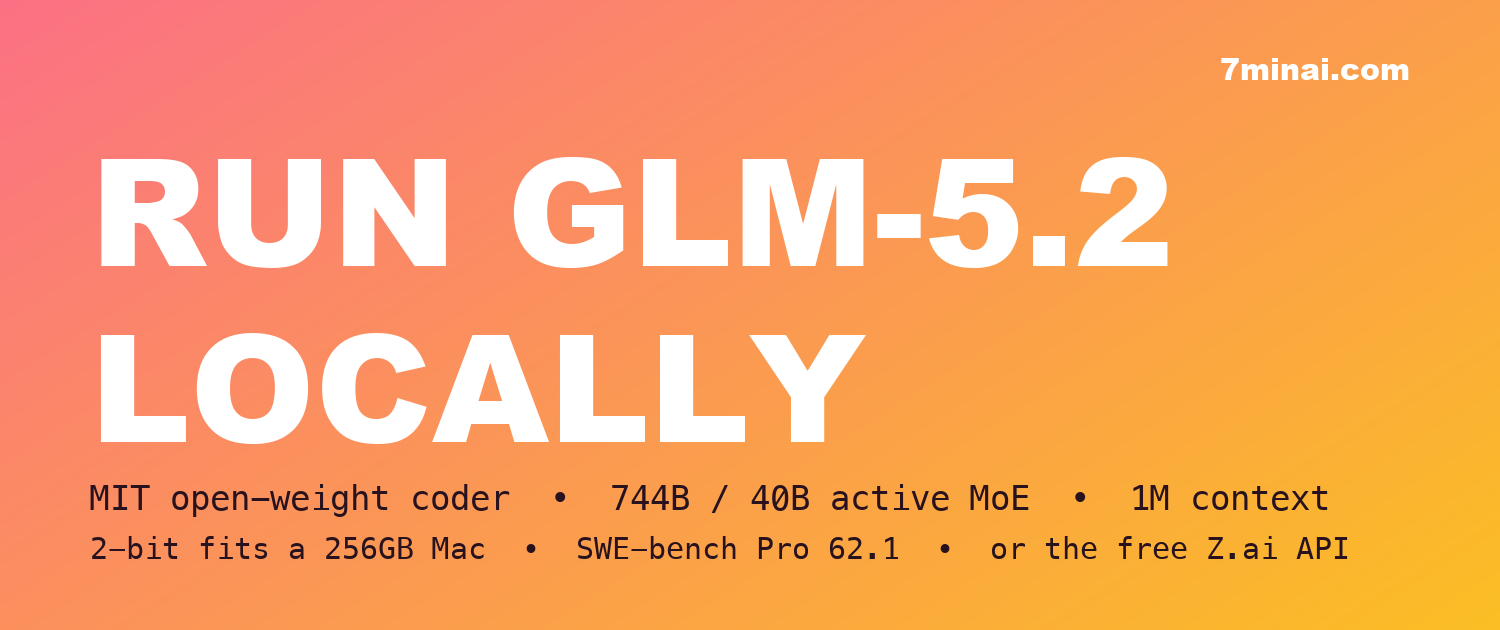
How to Run GLM-5.2 Locally (the MIT 744B Coder, and the 2-bit Build That Fits a 256GB Mac)
GLM-5.2 is Z.ai's flagship open-weight coding and agentic model — MIT-licensed, 744B total / 40B active MoE, a solid 1M-token context, and strong enough to hit 62.1 on SWE-bench Pro and 81.0 on Terminal-Bench 2.1. But 744B parameters means the local route needs serious memory. This guide gives the honest hardware reality, then three real ways to run it: llama.cpp with Unsloth's GGUF quants (the 2-bit build fits a 256GB Mac or a 24GB GPU with offload), the official vLLM / SGLang servers, and the free-to-start Z.ai API — plus the thinking-effort controls and the sampling settings straight from the official model card.
-
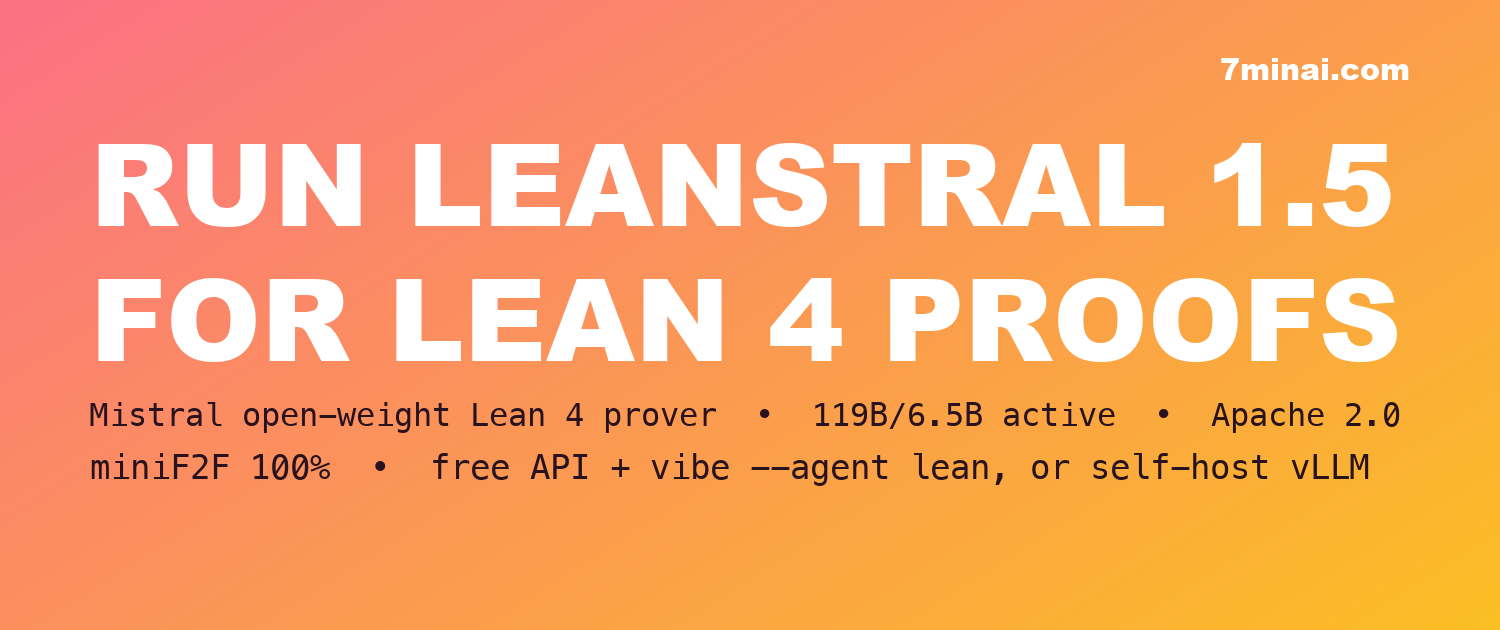
How to Run Leanstral 1.5 for Lean 4 Proofs (Local vLLM and the Free API Shortcut)
Leanstral 1.5 is Mistral's Apache-2.0 open-weight model for Lean 4 formal theorem proving and autoformalization — 119B total / 6.5B active MoE, 256K context, and strong enough to saturate miniF2F and solve 587/672 PutnamBench problems. This guide covers what it does, the two real ways to run it — the free Mistral API through the Vibe CLI (`vibe --agent lean`) and a self-hosted vLLM server (4-GPU) — plus the Lean 4 setup, hardware reality, and the recommended sampling settings, all from Mistral's official docs.
-
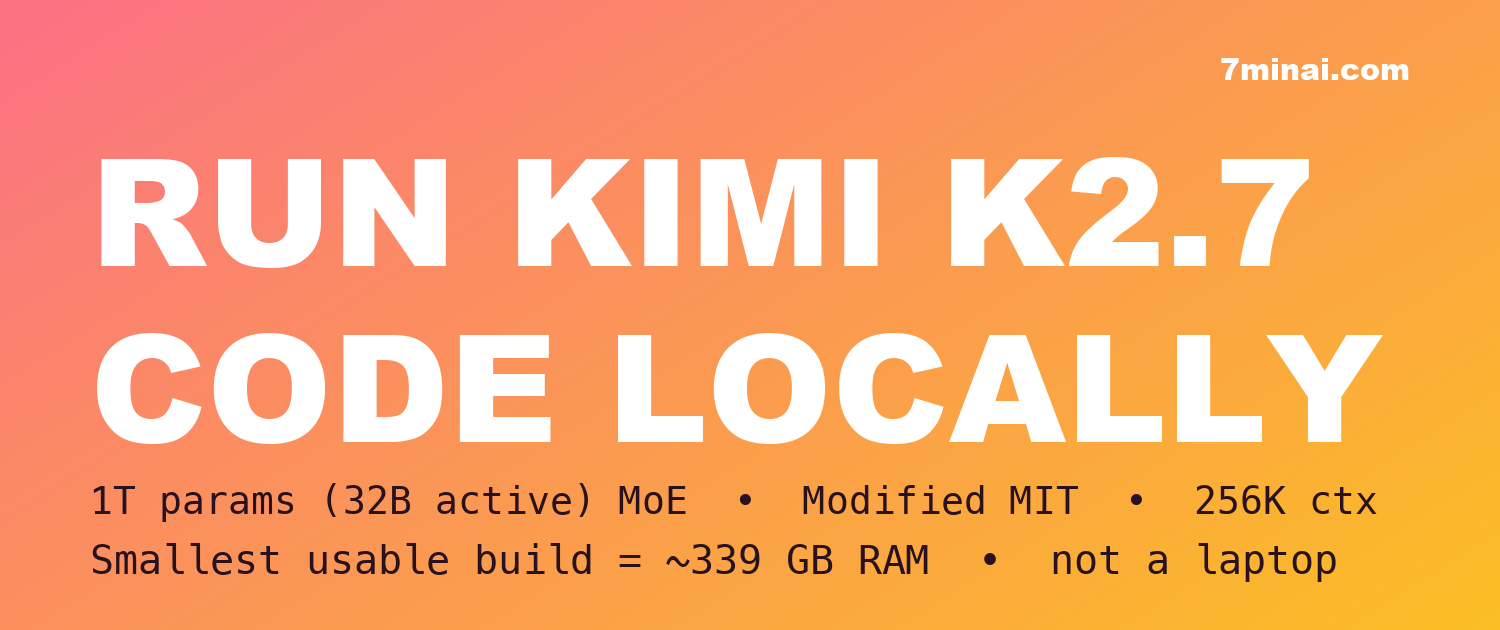
How to Run Kimi K2.7 Code Locally (and Whether You Actually Should)
Kimi K2.7 Code is Moonshot AI's new 1-trillion-parameter (32B active) open-weight agentic coding model — Modified MIT, 256K context, strong coding benchmarks. But '1T parameters' means the smallest usable local build is ~339 GB of combined RAM+VRAM, not a laptop. This guide gives the honest hardware reality, then three real ways to run it: llama.cpp with Unsloth's GGUF quants (big-memory local), the official vLLM / SGLang servers (datacenter GPUs), and the pragmatic path most people actually want — the Moonshot API or GitHub Copilot, where K2.7 just went GA.
-
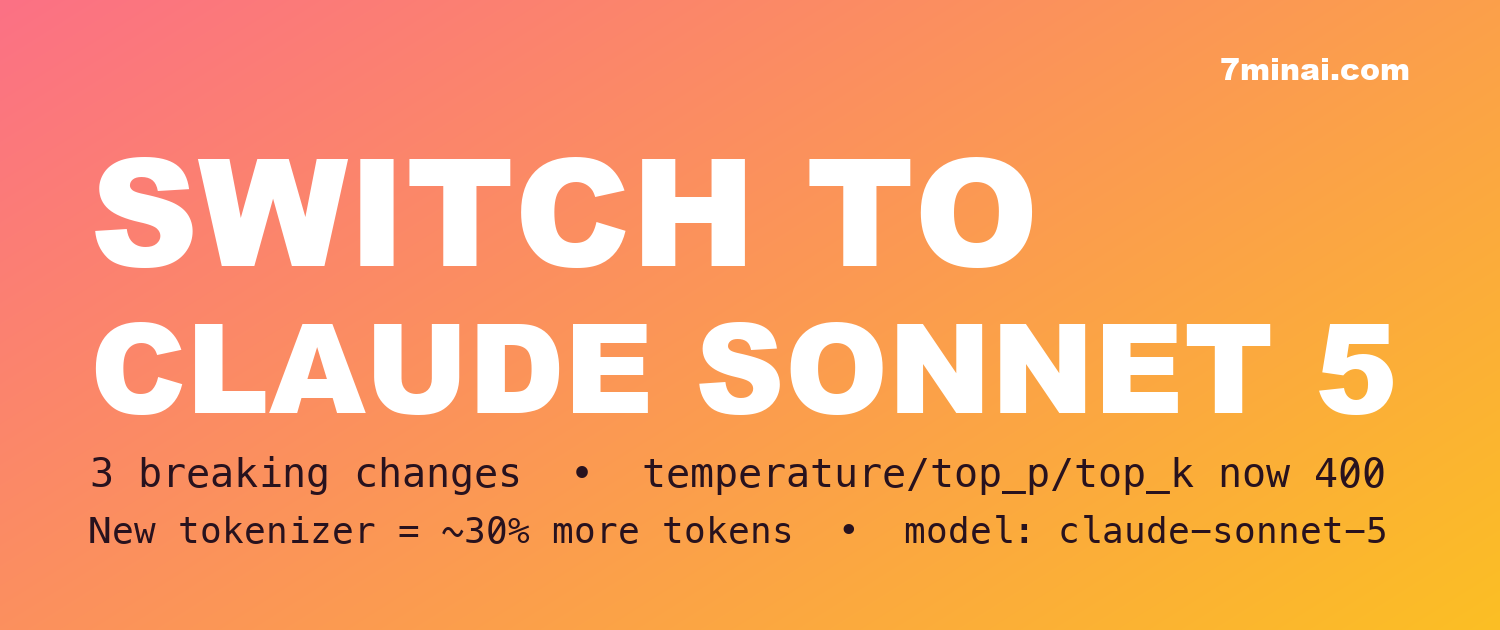
How to Switch to Claude Sonnet 5: 3 Breaking Changes and a Hidden 30% Token Cost
Claude Sonnet 5 (model id claude-sonnet-5) is a drop-in upgrade for Sonnet 4.6 — but 'drop-in' hides three API behavior changes that will throw 400 errors if you don't handle them, plus a new tokenizer that makes the same text cost ~30% more tokens. This guide walks the exact migration: the one-line model-ID swap, the three breaking changes (adaptive thinking on by default, sampling parameters rejected, manual extended thinking removed) with before/after code, the token-cost math you need to re-budget, pricing, availability, and when to pick Sonnet 5 over Opus 4.8 — all from Anthropic's official docs.
-
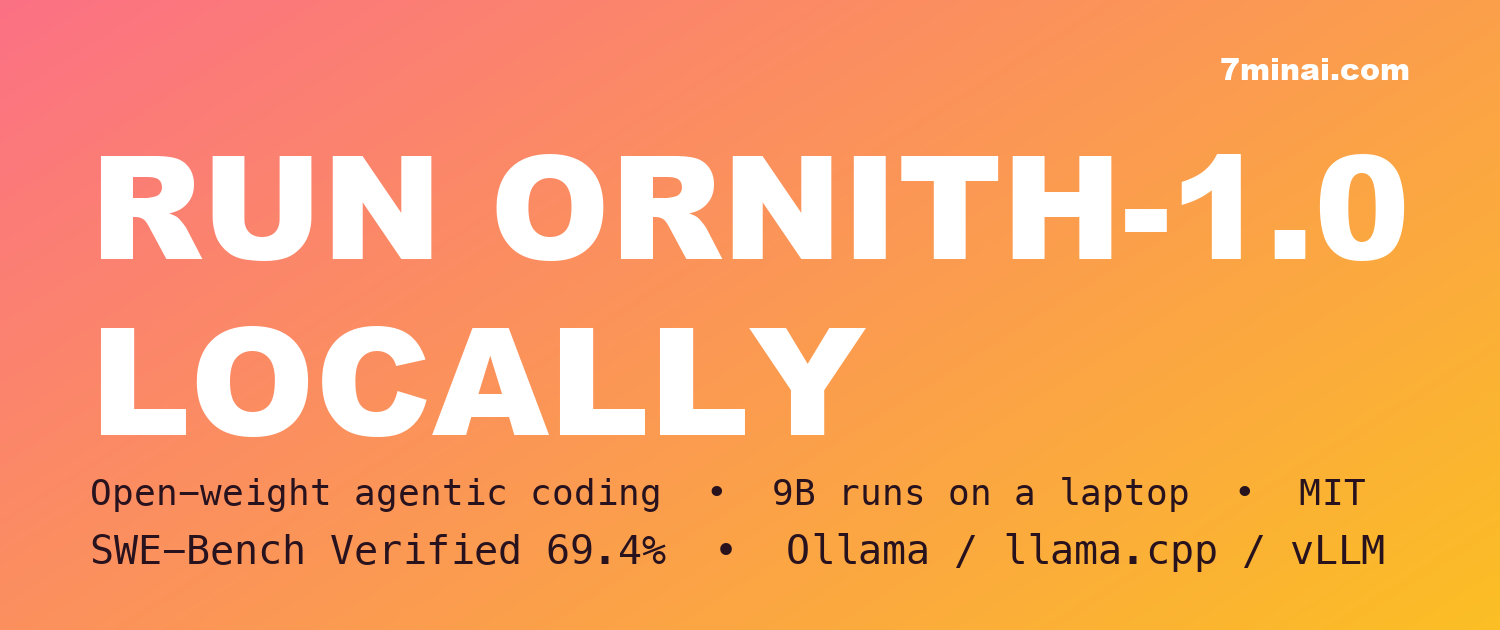
How to Run Ornith-1.0 Locally: The Open-Weight Coding Model That Writes Its Own Scaffold
Ornith-1.0 is DeepReinforce's MIT-licensed agentic-coding model family (9B / 31B dense, 35B / 397B MoE) built on Gemma 4 and Qwen 3.5. The 9B scores 69.4% on SWE-Bench Verified and runs on a normal laptop. This guide shows five ways to run it locally — Ollama and llama.cpp from the official GGUF, LM Studio, Hugging Face transformers (the official quickstart), and an OpenAI-compatible server (vLLM / SGLang) you can point a coding agent at — plus the reasoning-model settings that matter, honest benchmark expectations, and what 'self-scaffolding' actually means.
-
How to Run Apertus Locally: The Fully-Open Swiss LLM (8B & 70B) in 7 Minutes
Apertus is a fully-open, Apache-2.0 LLM from Switzerland's EPFL/ETH Swiss AI Initiative — trained on 15T tokens across 1,800+ languages with every artifact (data scripts, checkpoints, training code) released. This guide shows four ways to run it locally: Ollama, llama.cpp, Hugging Face transformers (the official quickstart), and MLX for Apple Silicon. Includes size/VRAM guidance, the chat template settings that matter, realistic benchmark expectations, and what 'fully open and compliant' actually buys you.
-

GitHub Copilot Usage-Based Billing: How AI Credits Work & How to Control Costs
On June 1, 2026 every GitHub Copilot plan moved to usage-based billing. Premium requests are gone, replaced by GitHub AI Credits charged on token usage. Here's exactly what changed, how many credits each plan includes, what still costs nothing, how to set a budget so you don't get a surprise bill, and what annual subscribers need to know.
-

How to Use MiniMax M3: API, Pricing, Coding Agent & Local Setup
MiniMax M3 is a 428B/23B-active open-weight model with a 1M context and native multimodality, reporting 59.0% on SWE-Bench Pro. Here's how to actually use it: the OpenAI-compatible API, the real pay-as-you-go pricing ($0.30/M input), how to wire it into a coding agent, and what it takes to run locally.
-
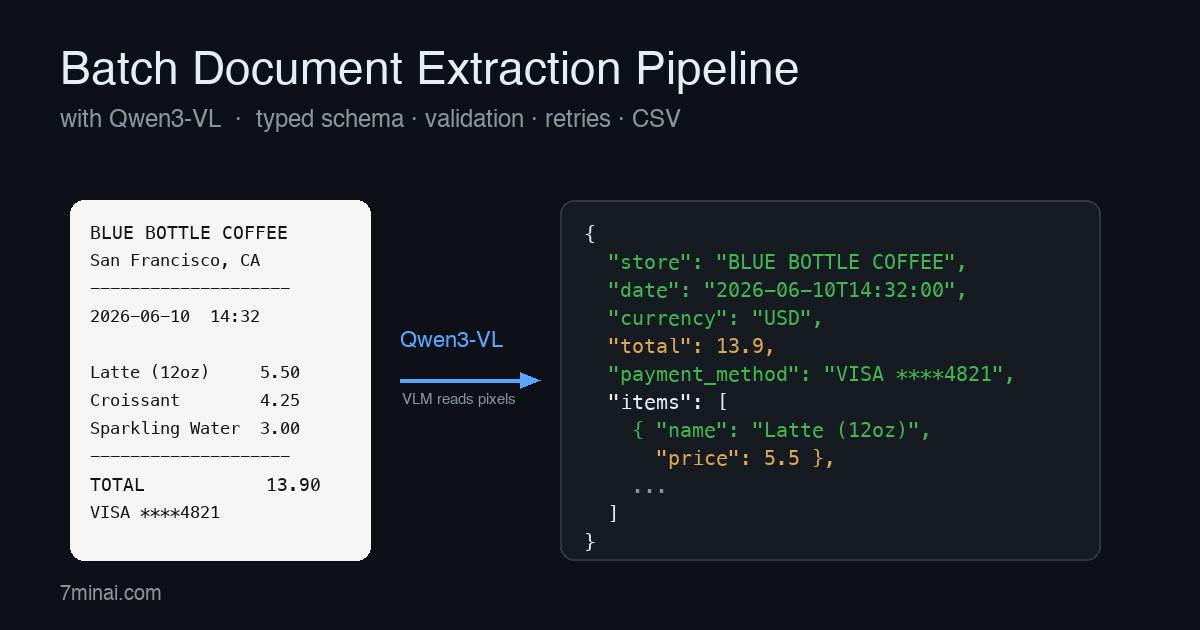
How to Build a Batch Document Extraction Pipeline with Qwen3-VL
A production batch pipeline that turns a folder of receipts, invoices, and PDFs into validated JSON and CSV — using Qwen3-VL through an OpenAI-compatible endpoint. Typed Pydantic schema, business-rule validation, retries, and concurrency. Every code block is from a pipeline that really runs; in this guide 3 receipts extract correctly in 5.7 seconds.
-
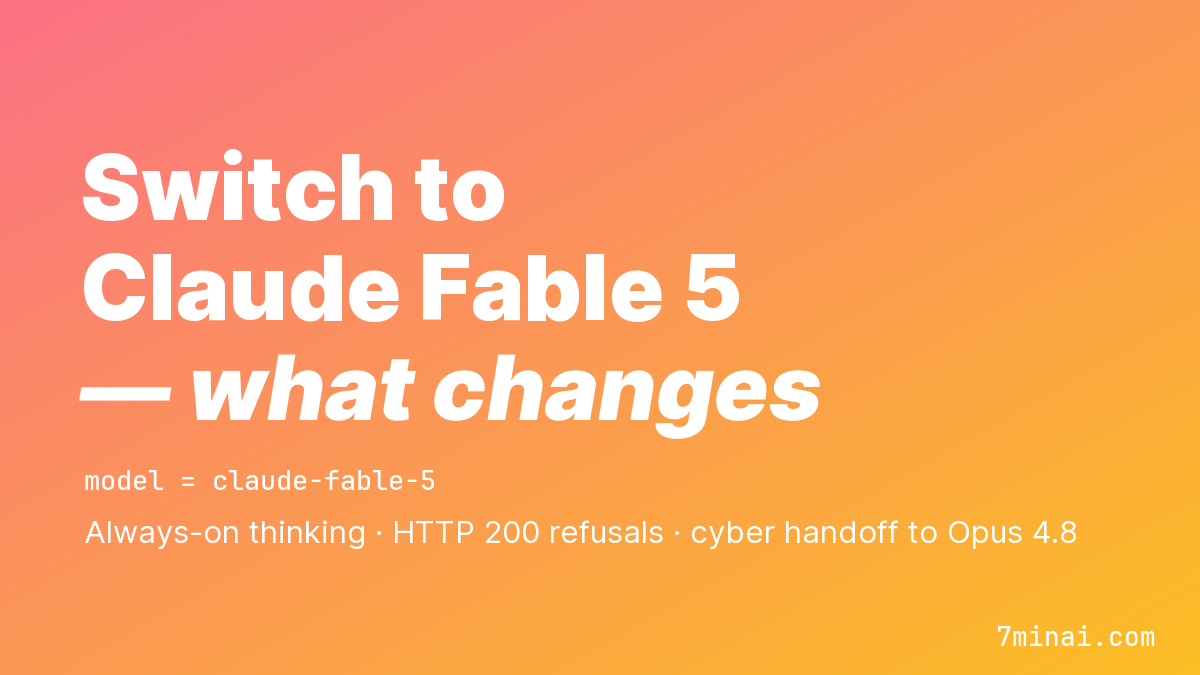
How to Switch to Claude Fable 5 (API, Claude Code, claude.ai) — and the 3 Things That Change
The model string is the easy part. Claude Fable 5 changes three things Opus 4.8 builders aren't expecting: thinking is always-on adaptive (you can't disable it), refusals come back as HTTP 200, and cyber/bio work is handed to Opus 4.8. Here's the complete switch for every surface, the exact model IDs, and the API gotchas — all from Anthropic's own docs.
-
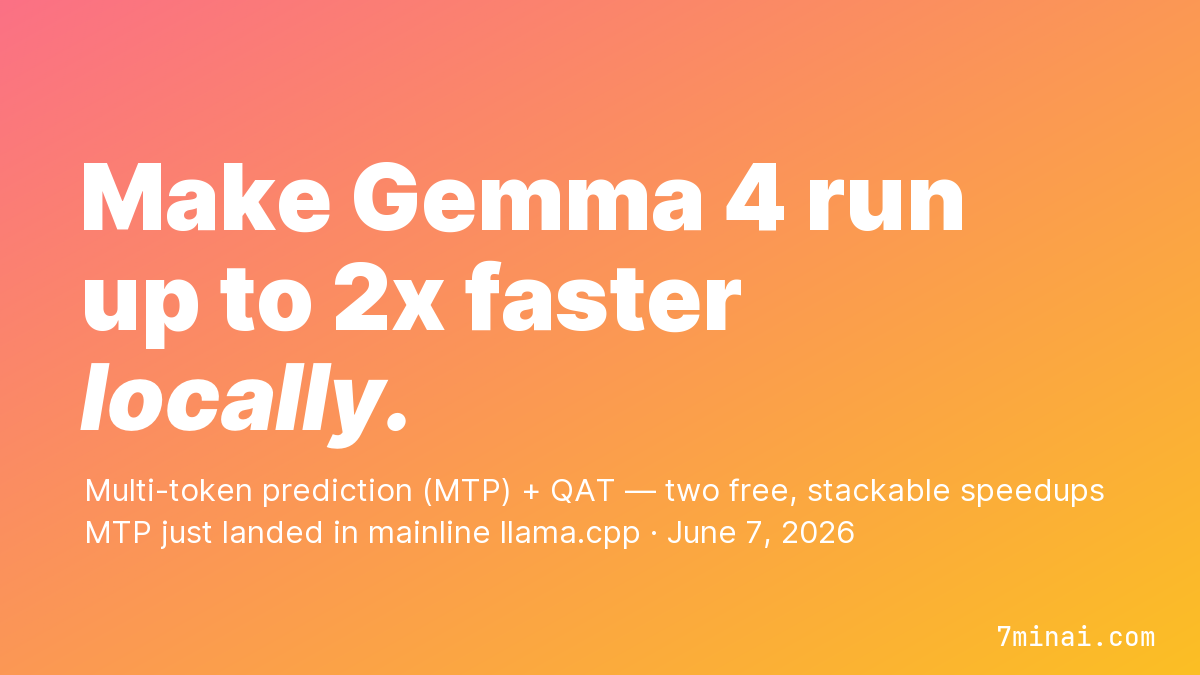
How to Make Gemma 4 Run up to 2x Faster Locally: Multi-Token Prediction (MTP) + QAT
Two free speedups for local Gemma 4 that people keep confusing. QAT cuts memory ~72%; multi-token prediction (MTP) roughly doubles decode throughput — and MTP just landed in mainline llama.cpp (merged June 7, 2026). The exact Ollama, llama.cpp, and Transformers commands, what speedup to actually expect, and which sizes are supported. Sourced from the merged PR and Google's own docs.
-
How to Run Gemma 4 12B Locally: Ollama, llama.cpp & Transformers (Text, Image, Audio)
Gemma 4 12B is Google's encoder-free open model that runs text, image, and audio on a 16GB laptop under Apache 2.0. The exact Ollama, llama.cpp/GGUF, and Transformers setup — including how to pass images and native audio — all from the official model card and Unsloth docs. Copy-paste safe.
-

How to Run Bonsai Image 4B Locally: On-Device Text-to-Image on Mac & PC
Bonsai Image 4B is a ternary/1-bit diffusion model that fits in ~1 GB and generates a 512×512 image in ~6 s on an M4 Pro — fully on-device, Apache 2.0, zero per-image cost. The exact setup, which quant to download, the one-shot CLI, and the local Studio server, all from PrismML's official demo repo.
-
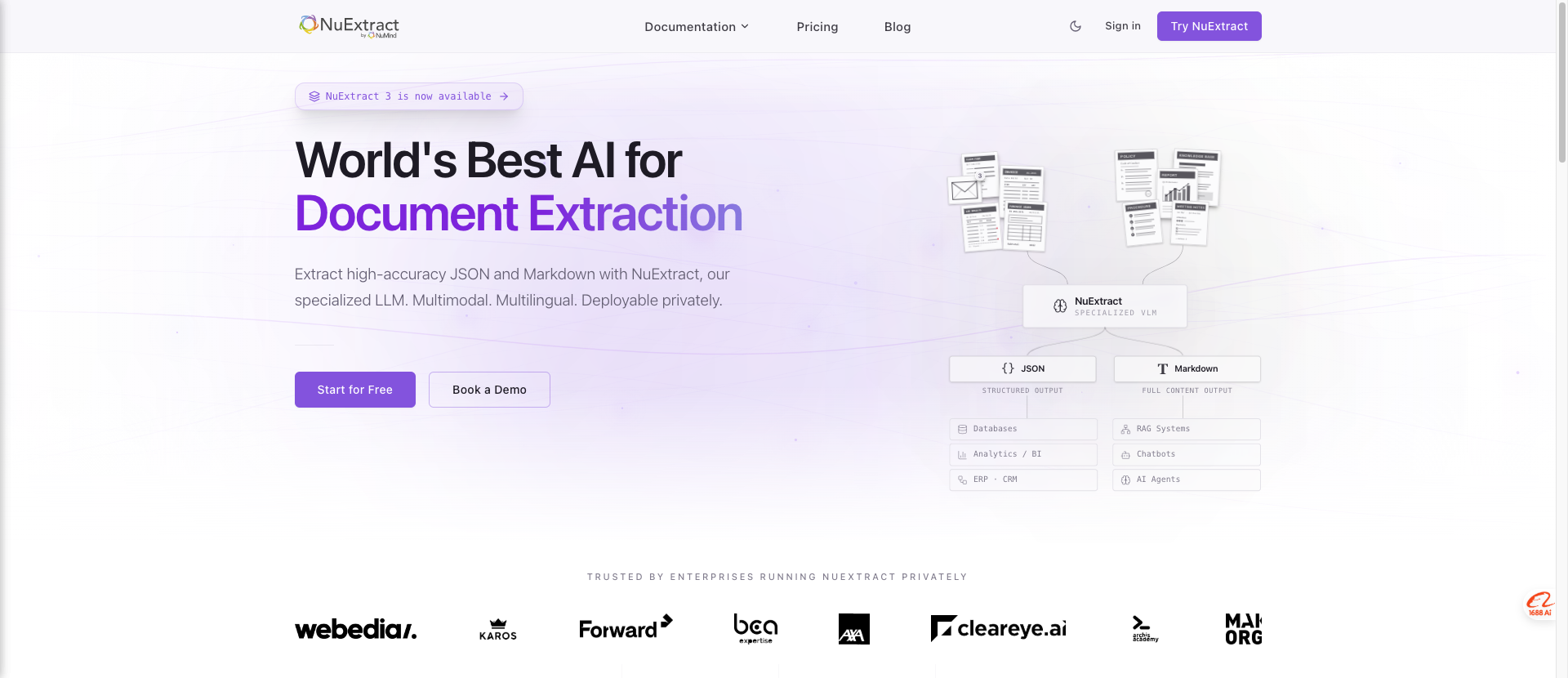
How to Run NuExtract 3 Locally: vLLM, Templates & Document Extraction
NuExtract 3 is a 4B open-weight VLM that pulls structured JSON out of any document — invoices, receipts, contracts, PDFs — and runs on a single 16GB GPU. The exact vLLM and Transformers setup, the JSON template language, image and multi-page PDF extraction, and document-to-Markdown — all from the official model card, copy-paste safe.
-
Run Qwen3.6-35B-A3B Locally for Coding: llama.cpp, Quants & VRAM
Qwen3.6-35B-A3B activates just 3B params but scores 73.4% on SWE-bench Verified — and it runs on a 24GB GPU or a 32GB Mac. The exact llama.cpp setup, which quant to pick, the VRAM math, and how to wire it into a coding agent.
-
Claude Code as a Daily Driver: CLAUDE.md, Skills, Subagents, Plugins & MCP
Most people use Claude Code like a chat box. The five features that turn it into a daily driver — persistent CLAUDE.md memory, reusable Skills, delegated Subagents, Plugins, and MCP servers — with the exact files, commands, and gotchas for each.
-

Claude Opus 4.8 is live — the 4 changes builders should actually care about (it is not the benchmark numbers)
Anthropic shipped Claude Opus 4.8 on May 28, 2026. Same price as 4.7, modest benchmark gains, but underneath are four shifts that change how you wire up agents: prompt cache minimum drops 4× from 4,096 to 1,024 tokens, fast mode drops 3× cheaper, mid-conversation system messages preserve cache, and Dynamic Workflows runs hundreds of parallel subagents for codebase-scale migrations. Here is what changes for builders.
-

How to Enable Claude Opus 4.8 in Cursor, Claude Code & the API
Claude Opus 4.8 not showing up? It doesn't appear everywhere automatically. Here's how to enable it in Cursor, Claude Code, claude.ai, and the Anthropic API — including the stale-CLI fix when it's missing from your model picker, and the model-ID gotcha that breaks API calls.
-
Anthropic and OpenAI just found product-market fit — the $2,180/month bill Simon Willison made public, and what builders should do about it
Simon Willison's May 27 post says Anthropic and OpenAI have finally reached PMF — through coding agents. The receipts: his own $1,199.79 Claude Code + $980.37 Codex monthly bill, Anthropic's projected $10.9B Q2 revenue, SpaceX's $1.25B/month contract, 25% of Uber's commits from Claude Code. Here is what builders should actually change about their stack in response.
-
Use AI to write better code, more slowly — the multi-agent code review workflow that beats one-shot generation
Nolan Lawson's HN-trending essay nails the inversion: most builders use AI to ship low-quality code fast; the better play is using it to ship high-quality code slowly. Here is his actual workflow, why the EURECOM Constraint Decay benchmark says it works, and why DeepSeek-tier pricing makes it affordable to run 4-7 sub-agents per PR.
-
Constraint Decay — why AI coding agents nail prototypes but break on production backends (and the 8-framework benchmark that proves it)
A new EURECOM paper benchmarks GPT-5.2, Kimi K2.5, MiniMax M2.5, Qwen3-Coder-Next and others across 8 web frameworks and 4 constraint levels. Capable models lose 30 points (40% relative) when you add architecture + database + ORM rules on top of an API spec. Here is what the data actually says, and what to do about it as a builder.
-
Reasonix — the DeepSeek-native coding agent that proves V4 Pro's cache math (99.82% hit, $12 instead of $61)
Reasonix is an MIT-licensed terminal AI coding agent engineered around DeepSeek's prefix cache. The author published a real benchmark — 435M input tokens in a day at 99.82% cache hit, costing $12 instead of $61. Here is what it is, how to install it in 2 minutes, and how it compares to Claude Code / Cursor / Aider.
-
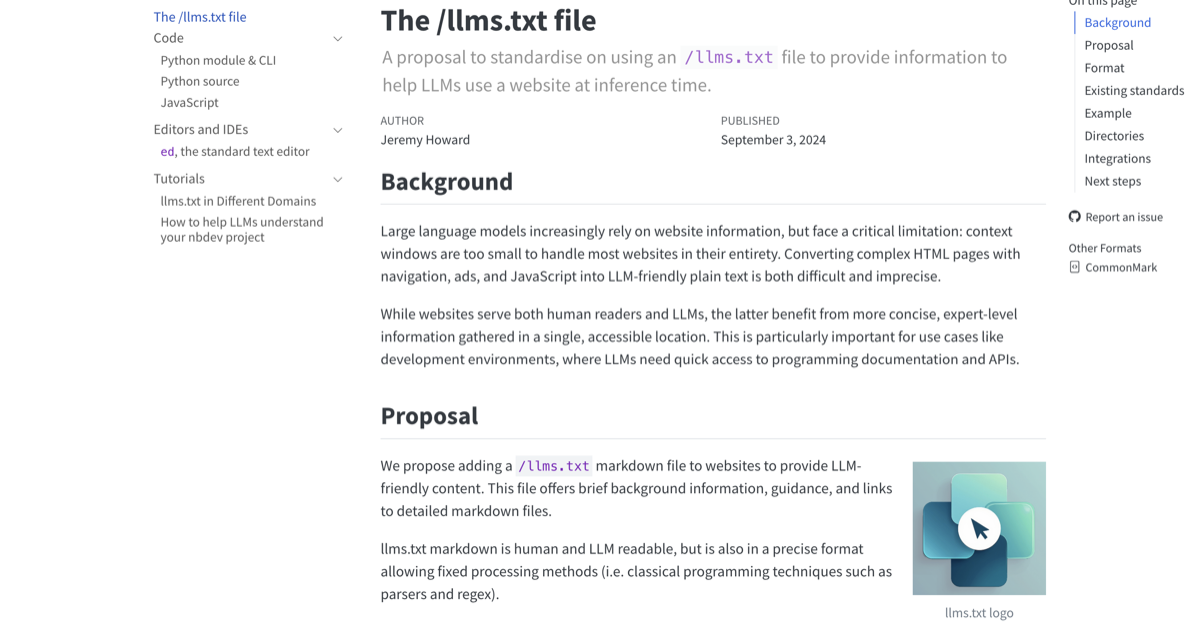
How to add /llms.txt to your site — the LLM-friendly standard, with a real example
Anthropic, Vercel, Cursor, and now 7minai all have a /llms.txt file. It tells LLMs what your site is about and lists your most useful pages — and unlike robots.txt or sitemap.xml, it is markdown that humans can also read. Here is the full spec, a real example you can copy, and the 10-minute Astro implementation.
-

7 Minutes to Master DeepSeek V4 Pro — The 75% Permanent Price Cut Changes the Agent Math
DeepSeek made the V4 Pro 75% price discount permanent on May 22, 2026. Input is now $0.435 / 1M tokens (cache hit: $0.003625) and output $0.87 / 1M — roughly 1/2 of Claude Haiku 4.5, 1/10 of Gemini 3.5 Flash output. Here is exactly what changed, how to use it via API and Chat, the cache-hit math, and when it actually wins.
-
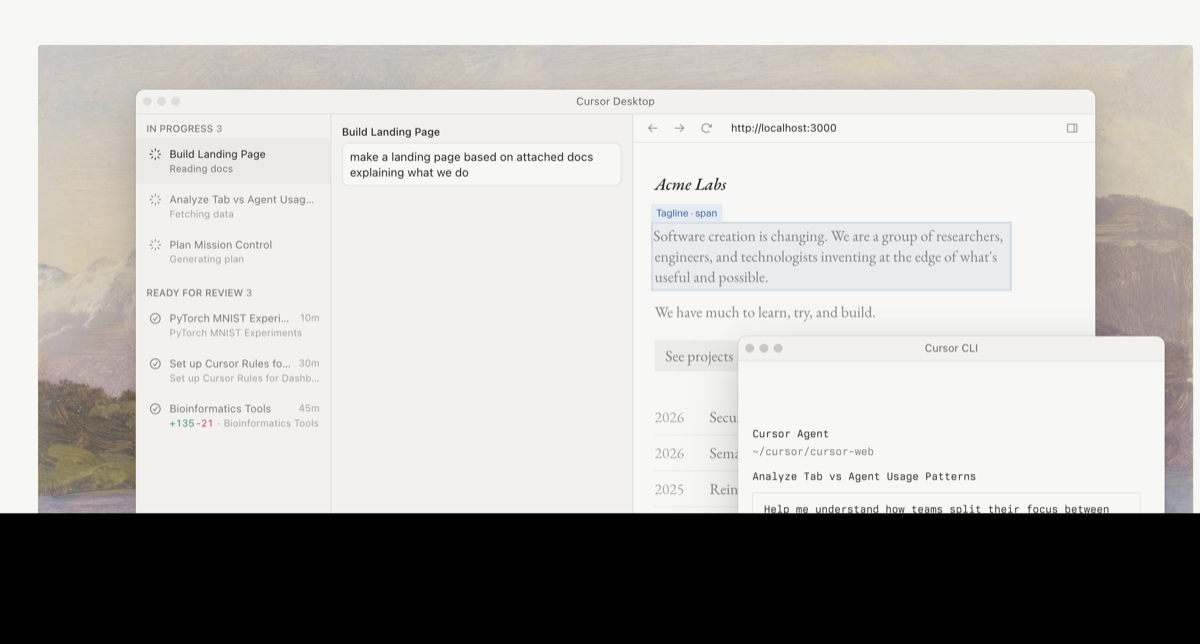
How to Use Cursor Composer 2.5: Setup, Pricing & Benchmarks
How to use Cursor Composer 2.5 in your IDE: step-by-step setup, the real pricing (and the fast-variant trap), and how it compares to Opus 4.7 / GPT-5.5 on coding benchmarks — plus when not to switch.
-

How to Use Qwen3.7-Max: Qwen Chat, Pricing & Benchmarks
How to use Alibaba's Qwen3.7-Max right now: switch to it free in Qwen Chat (no signup), what it actually outputs on a real coding task, the 1,000-tool-call / 35-hour agentic claims, the pricing, and when to pick it over Claude Opus 4.7 or GPT-5.
-

Gemini 3.5 Flash: Pricing, Benchmarks & Whether to Upgrade
Google's agent-tier Gemini 3.5 Flash skips 3.2/3.3/3.4 and lands at $1.50/M in + $9/M out — 3× pricier than 3 Flash but beating 3.1 Pro on most benchmarks. The real pricing, the benchmark wins, and whether the 3× is worth it over the older Flash.
-
50 Best Gemini 3.5 Flash Agent Prompts
Stop using chat prompts for an agent-tier model. 50 prompt templates for Gemini 3.5 Flash, organized by use case, designed to take advantage of the 1M context window and streamed reasoning.
-

Gemini 3.5 Flash vs Claude Haiku 4.5: The Agent-Tier Pick in 2026
Two agent-tier models on paper, two different design philosophies. Compare context windows, pricing, native multimodality, and reasoning behavior — using only published numbers, not made-up benchmarks.
-

7 Minutes to Master Gemini Omni Flash
Gemini Omni Flash is Google's new any-to-video model — drop in text, image, audio, video, or a sketch, get back a 10-second clip with sound. Clips are capped, the API isn't open yet, but pricing leaks at $0.10–0.30 per second. Here's how to use it and how it compares to Veo, Sora, Kling, and Runway.
-
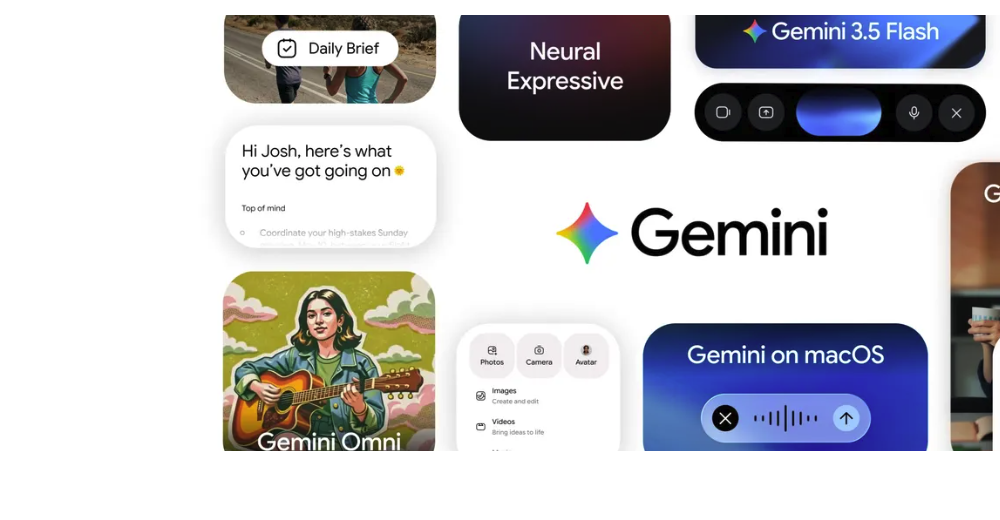
7 Minutes to Master Gemini Spark
Gemini Spark is Google's first proper consumer agent — it runs 24/7 on its own Google Cloud VM, drafts emails by reading your docs, and is powered by Gemini 3.5 + the Antigravity agentic harness. Here's exactly what it does, who can use it today, and how to think about it as a builder.
-
How to Use Gemini 3.5 Flash: Step-by-Step Tutorial
Everything from your first message in the app to setting up the API for agentic workflows. We cover AI Studio, the model ID string for Cursor/Cline, and how to verify you are actually using the 3.5 engine.