Apple rebuilt Apple Intelligence on Google Gemini — and opened its frameworks to Claude and MCP
At WWDC 2026 on June 8, Apple revealed that its next-generation Apple Foundation Models are custom-built with Google's Gemini. Apple evaluated OpenAI and Anthropic first and picked Google. The bigger story for builders: a new Foundation Models Swift framework, a language-model protocol that lets you wire in Claude or any provider, and Xcode 27 with built-in agents and Model Context Protocol support.
Apple announced at WWDC 2026 on June 8, 2026 that the next generation of Apple Foundation Models is custom-built in collaboration with Google and its Gemini models. (Source: Apple Newsroom, 2026-06-08) For a company that spent two years insisting on its own models, this is a strategy reversal — and it tells builders exactly which way the foundation-model market is tilting.
Key facts:
- Apple Foundation Models are now co-developed with Google’s Gemini. (Source: Apple Newsroom, 2026-06-08)
- Apple evaluated OpenAI and Anthropic before choosing Google. (Source: Apple Newsroom / WWDC 2026 reports, 2026-06-08)
- AFM Cloud Pro is the top tier and is described as similar in quality to Google’s Gemini Frontier models.
- AFM Cloud Pro runs on Nvidia GPUs inside Google’s cloud, served through Apple’s Private Cloud Compute.
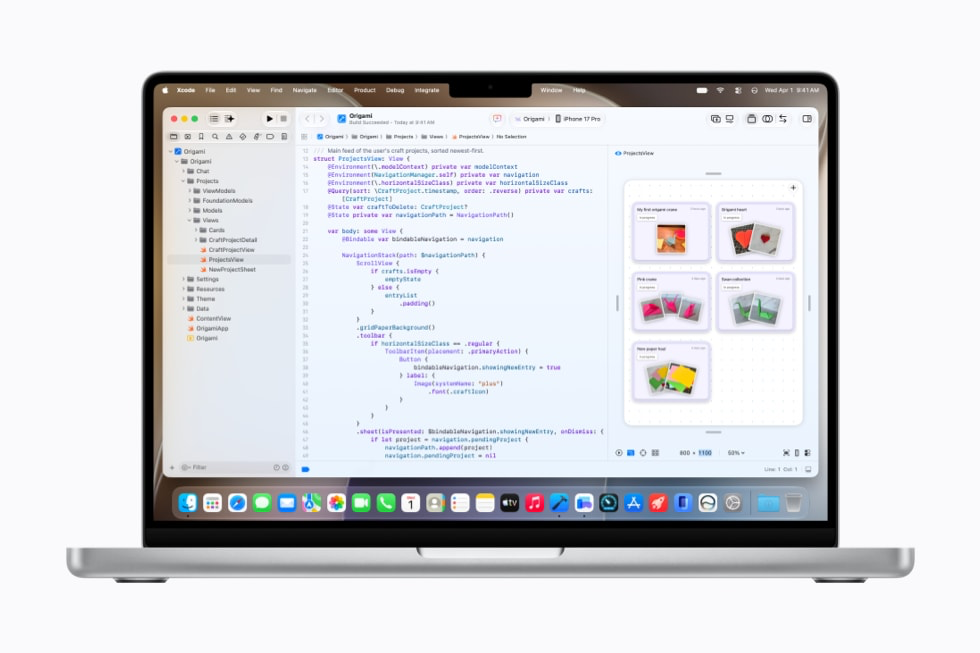
- Apple shipped a new Foundation Models framework — a single Swift API for on-device models (with image input), server models, and custom skills.
- A new language model protocol lets developers plug in Claude, Gemini, or any other provider.
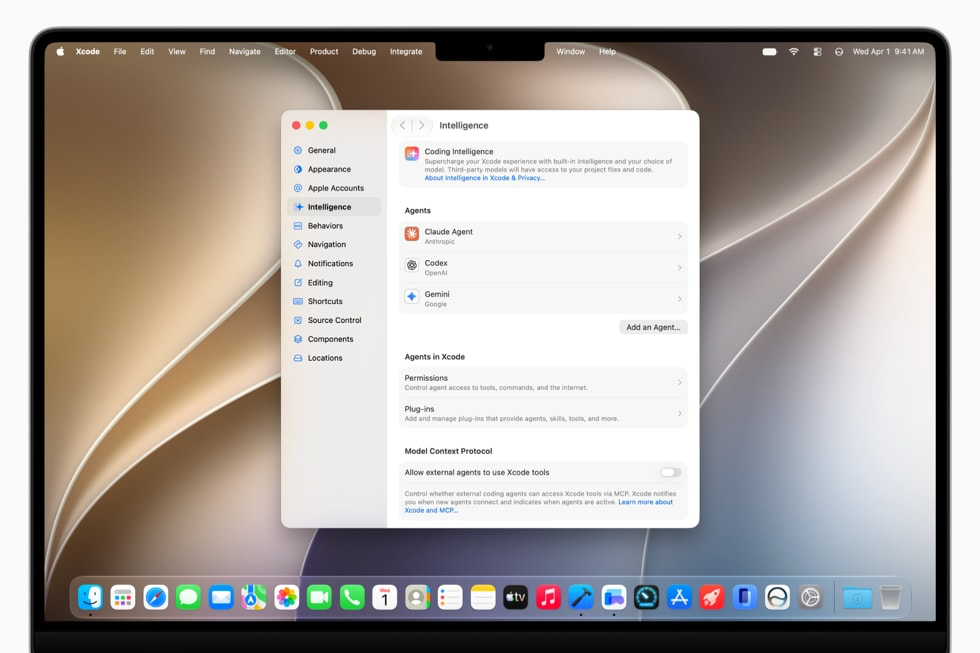
- Xcode 27 integrates coding agents from Anthropic, Google, and OpenAI, and adds Model Context Protocol plug-in support.
- Small Business Program developers (under 2M App Store downloads) get free access to Apple Foundation Models via Private Cloud Compute.
What this means if you’re building
Two things changed for developers, and they matter more than the headline partnership.
First, the Foundation Models framework is now provider-agnostic. Apple’s own model is the default, but the new language-model protocol means you can route a feature to Claude, to Gemini, or to a self-hosted model behind the same Swift API. You write against one interface and swap the engine — the same decoupling pattern that Bedrock and the OpenAI-compatible API ecosystem already pushed onto the server side.
Second, Xcode 27 ships agents and Model Context Protocol support out of the box. Plug-ins talk to your tools over MCP, the same protocol Claude Code and a growing list of editors use. If you’ve already built MCP servers for your stack, they now reach into Xcode’s agent without a rewrite. (For background on why MCP and machine-readable context files matter for AI tooling, see our llms.txt guide.)
The free AFM tier for small developers is the sleeper detail. If you ship an app with under 2M downloads, you can call Apple Foundation Models through Private Cloud Compute at no cost — a real on-ramp for indie builders who can’t yet justify per-token API bills.
The takeaway: even Apple now treats frontier models as something to source rather than own. If you’re choosing a stack, Gemini just got the strongest possible third-party validation — and Claude stays a first-class option inside Apple’s own tools.
Sources
- Apple unveils next generation of Apple Intelligence, Siri AI, and more — Apple Newsroom
- Apple aids app development with new intelligence frameworks and advanced tools — Apple Newsroom
- Apple Reveals New AI Architecture Built Around Google Gemini Models — MacRumors
Related on 7minAI: Gemini 3.5 Flash hands-on · Claude Code as a daily driver · Claude Code vs Codex, head to head
Source: Apple Newsroom