Claude Cowork comes to mobile and web — and Anthropic's own data says 91% of it isn't coding
On July 8, 2026 Anthropic brought Claude Cowork to the web and iPhone/iPad/Android for Max subscribers, adding scheduled and background runs that finish with every device offline. Alongside it, Anthropic released usage data from 1.2M sessions showing software development is just 8.7% of what Cowork actually does.
Anthropic brought Claude Cowork to the web and mobile on July 8, 2026, starting with Max subscribers and expanding to other paid plans over the following weeks. (Source: TechCrunch, 2026-07-07) Cowork launched as a desktop app in January 2026; this update puts it on claude.ai and in the iPhone, iPad, and Android apps. The more interesting release is the usage data Anthropic published with it.
Key facts:
- Web and mobile access is rolling out as a beta to Max first, then to additional paid plans over the coming weeks. (Source: TechCrunch, 2026-07-07)
- Tasks can be scheduled and run in the background with no device online — Anthropic’s example: “Set Monday’s client prep for 6 am,” and Claude works through email threads, transcripts, and news to build a briefing doc and draft the follow-up. (Source: 9to5Mac, 2026-07-07)
- A human-in-the-loop gate stays: “When Claude reaches a call only you can make, it asks.” (Source: 9to5Mac, 2026-07-07)
- The usage study covered 1.2 million anonymized sessions from 600,000+ organizations over the last two weeks of May 2026. (Source: TechCrunch, 2026-07-07)
- Software development was 8.7% of Cowork usage. Business process operating (reports, checklists, spreadsheet reconciliation) was 33.4%; content creation and copywriting was 16.4%. (Source: TechCrunch, 2026-07-07)
- Cowork usage limits are doubled through August 5, 2026 to mark the launch. (Source: 9to5Mac, 2026-07-07)
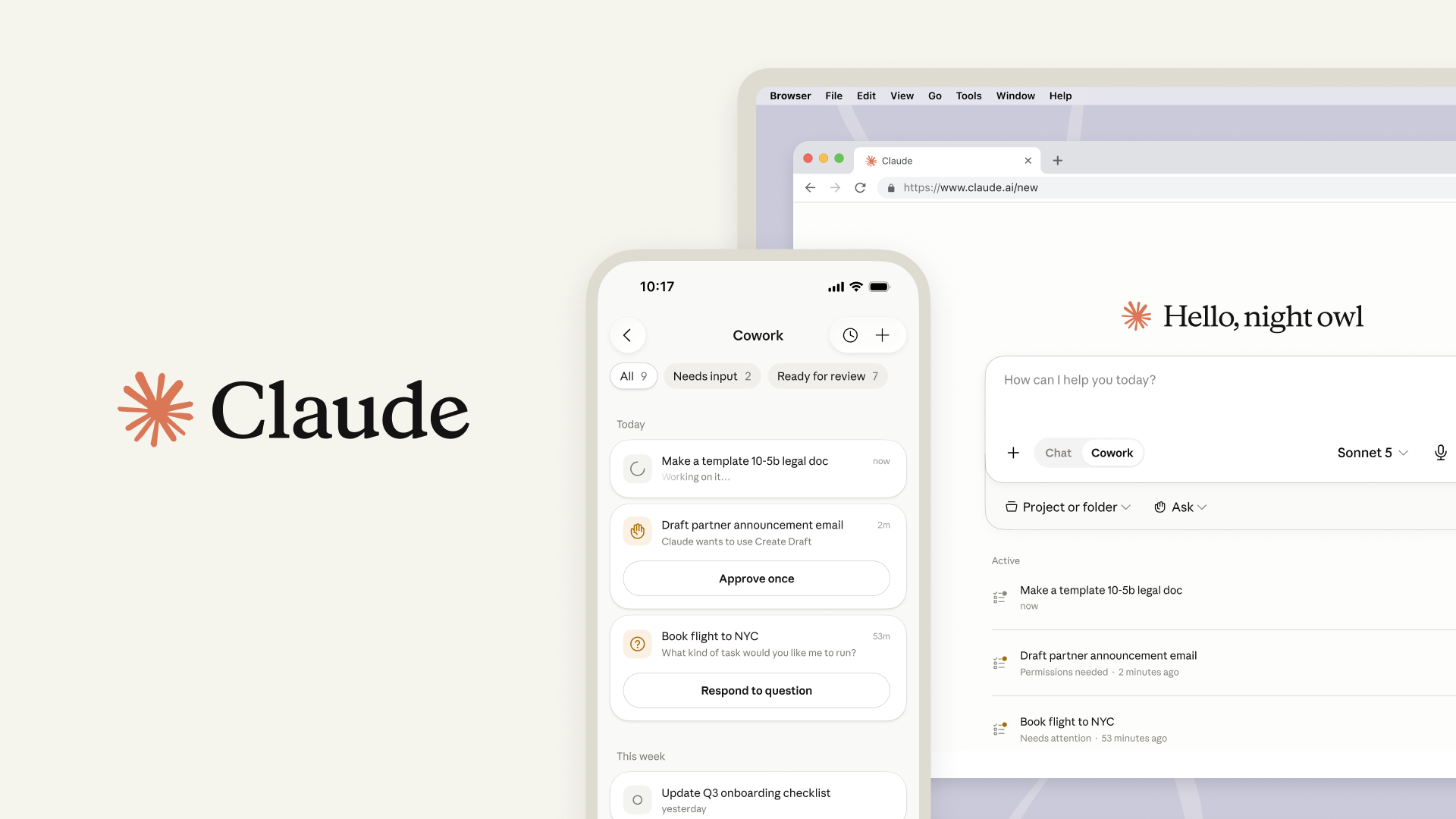 Cowork now runs across desktop, web, and phone; scheduled tasks continue with every device closed. (Source: Anthropic press image via TechCrunch, 2026-07-07)
What this means if you’re building with Claude
The coding-agent narrative has dominated 2026, but Anthropic’s own numbers say the office, not the IDE, is where an always-on Claude agent gets used. Two takeaways for builders:
- The background/scheduled model is the real shift, not the phone app. A task that survives with no device online is a server-side cron for an agent. If you’re building on the Claude Agent SDK, this is the consumer-facing version of the architecture you’d assemble yourself — kick off a run, let it work, approve the one decision that needs a human. Treat Cowork’s scheduled runs as the reference UX for how end users expect autonomous agents to behave.
- Weight your product bets toward non-coding knowledge work. 91.3% of Cowork sessions were not software development, and value concentrated in a few task types — process operations and content drafting. If you’re deciding where an agent adds value inside a company, the data argues for spreadsheet reconciliation, report assembly, and drafting over another code assistant.
The trade-off to watch: background execution plus doubled limits means it’s easy to burn usage on runs you forget you scheduled. Instrument what your agents actually do before you lean on unattended runs.
If you’re building agent workflows on Claude, our Claude Code daily-driver setup covers running agents efficiently, and Claude Code vs Codex head-to-head compares harnesses if you want a fallback. For the model powering it, see our Claude Opus 4.8 guide.
Sources
Source: TechCrunch