OpenAI is keeping Zero Data Retention for frontier models — but your agent cannot keep server-side state
OpenAI previewed Private Safety Processing on August 19, 2026 for eligible Zero Data Retention API customers. It promises cross-request automated safety signals without staff access to prompts. ZDR still forces Responses API storage off and rules out background mode, Code Interpreter, and extended prompt caching.
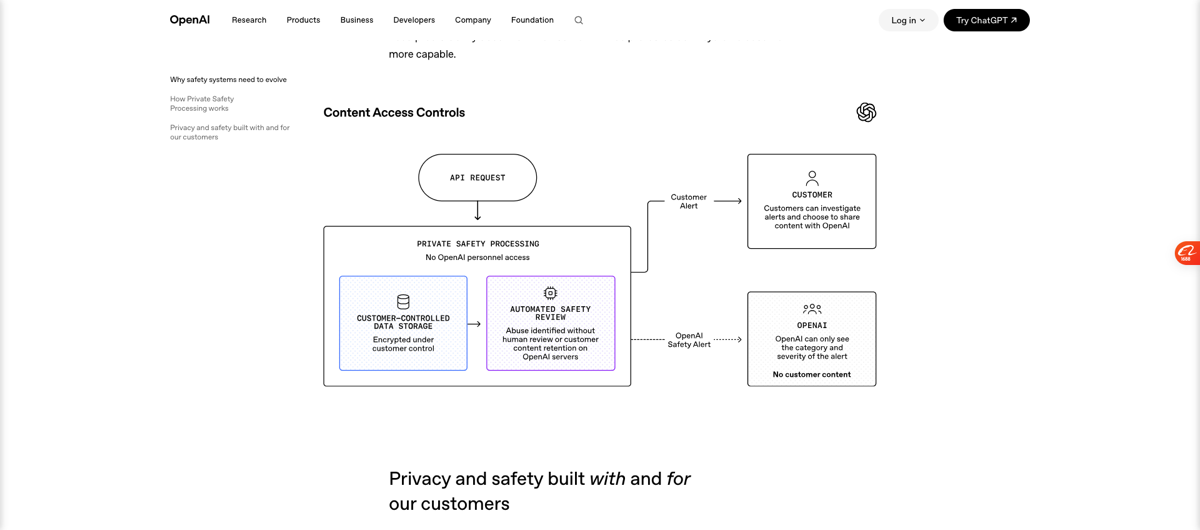
OpenAI previewed Private Safety Processing on August 19, 2026. It is meant to let eligible API customers keep Zero Data Retention (ZDR) while automated systems detect risk patterns across related requests. OpenAI says personnel do not receive the underlying prompts or responses. (Source: OpenAI announcement, 2026-08-19)
Key facts:
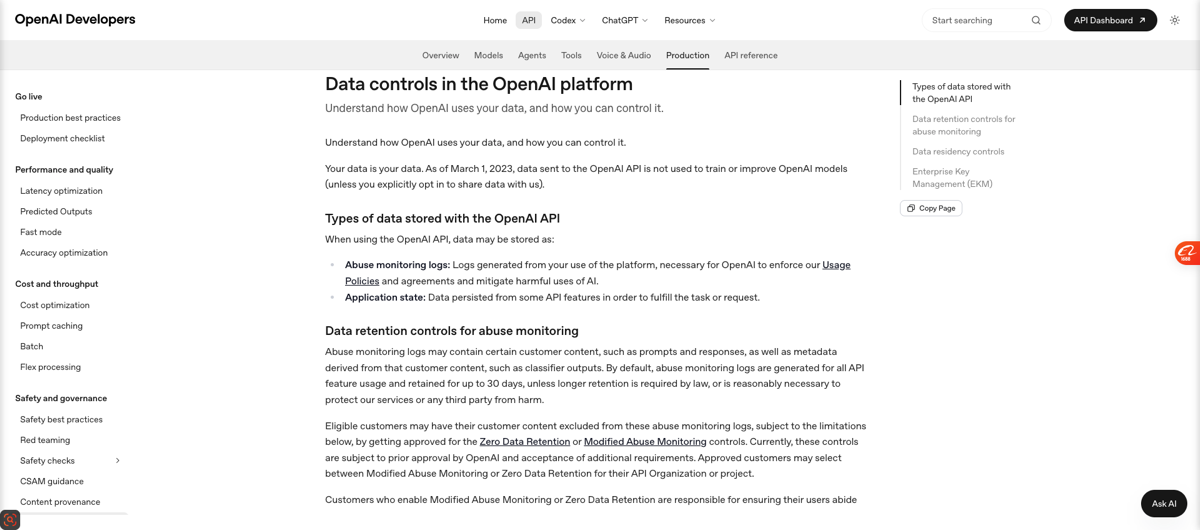
- ZDR is approval-only. It is available to eligible API organizations and projects after approval and additional requirements. (Source: OpenAI data controls)
- ZDR forces
store: falseon/v1/responsesand/v1/chat/completions. Sendingstore: truedoes not override it. - Background mode is not ZDR-compatible. It keeps response data for roughly 10 minutes so a client can poll for completion.
- Code Interpreter and extended prompt caching are not ZDR-compatible. Both need retained application state.
- Private Safety Processing is still an early-customer preview. OpenAI says a technical white paper and rollout are planned for September.
What this means if you’re building with the OpenAI API
1. ZDR is a deployment constraint, not a checkbox for an existing agent. The important change is not a new request parameter. The current API documentation says ZDR makes store false for Responses and Chat Completions. If your orchestration later calls responses.retrieve(), expects server-side conversation state, or uses background=true, move that state and polling design to infrastructure you control before enabling ZDR.
2. “OpenAI cannot read it” is narrower than “nothing is retained anywhere.” OpenAI distinguishes abuse-monitoring logs from application state. ZDR excludes customer content from abuse-monitoring logs, but features marked ineligible can still retain application state. Image and file inputs are scanned for potential CSAM; a flagged item can be retained for review even under ZDR. (Source: OpenAI data controls)
3. Private Safety Processing does not make a regulated workload automatically compliant. The announced system is designed to connect related interactions while returning only a risk type signal to OpenAI. That is useful for buyers who could not accept human review of prompts. It does not remove your own retention, regional-processing, BAA, or third-party MCP obligations. Remote MCP servers retain data under their own policies, not OpenAI’s.
4. Choose the control based on the feature you need. ZDR is the stricter path when your agent can keep history, files, and job state in your own stack. Modified Abuse Monitoring keeps more platform capability but is still approval-gated. If you need hosted Code Interpreter, background jobs, or extended prompt caching, do not promise customers a ZDR deployment you cannot actually operate.
For a GPT-5.6 migration, start with a single stateless request on your intended endpoint, verify the organization/project retention setting, then add your own encrypted state store before expanding the agent. Our GPT-5.6 switching guide covers the model-selection side; the new announcement is about the data boundary around it.
Sources: OpenAI — Offering Zero Data Retention for frontier models (2026-08-19) · OpenAI API — Data controls · OpenAI — Enterprise privacy
Related: How to switch to GPT-5.6 · GPT-5.6 on AWS Bedrock · GPT-5.6 preview
Source: OpenAI official announcement