NotebookLM now runs on Gemini 3.5 with a code-executing 'cloud computer' and 100+ skills
On June 8, 2026, Google rebuilt NotebookLM on Gemini 3.5 and Antigravity. Every notebook now gets a secure cloud computer that writes and runs code, plus 100+ built-in skills and outputs in PDF, XLSX, PPTX, CSV, JSON, and charts. Google reports a 78.2% win rate on web research. Here's what it changes if you build research or RAG tools.
Google upgraded NotebookLM to run on Gemini 3.5 and Antigravity on June 8, 2026, and gave every notebook a secure cloud computer that can write and execute code. (Source: Google Blog, 2026-06-08) NotebookLM stopped being a document summarizer and became an agentic research tool — which puts it squarely in the path of anyone building their own RAG or analysis pipeline.
Key facts:
- NotebookLM now runs on Gemini 3.5 and Antigravity. (Source: Google Blog, 2026-06-08)
- Every notebook gets a secure cloud computer that writes and runs code on your sources.
- It ships with more than 100 curated software skills.
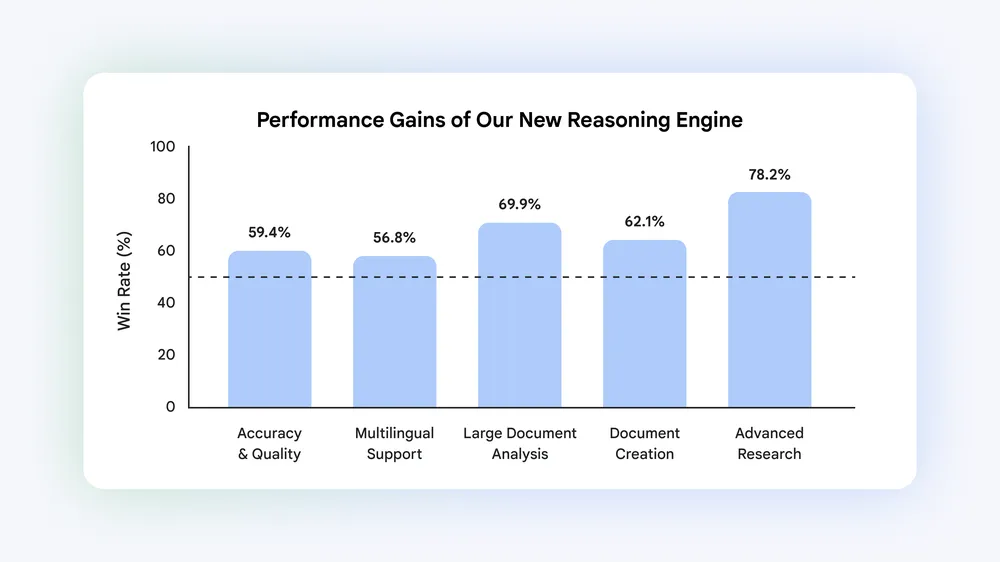
- Google reports a 65% average win rate over the prior system across core dimensions.
- It reports a 69.9% win rate on large-document analysis.
- It reports a 78.2% win rate on web research and source discovery.
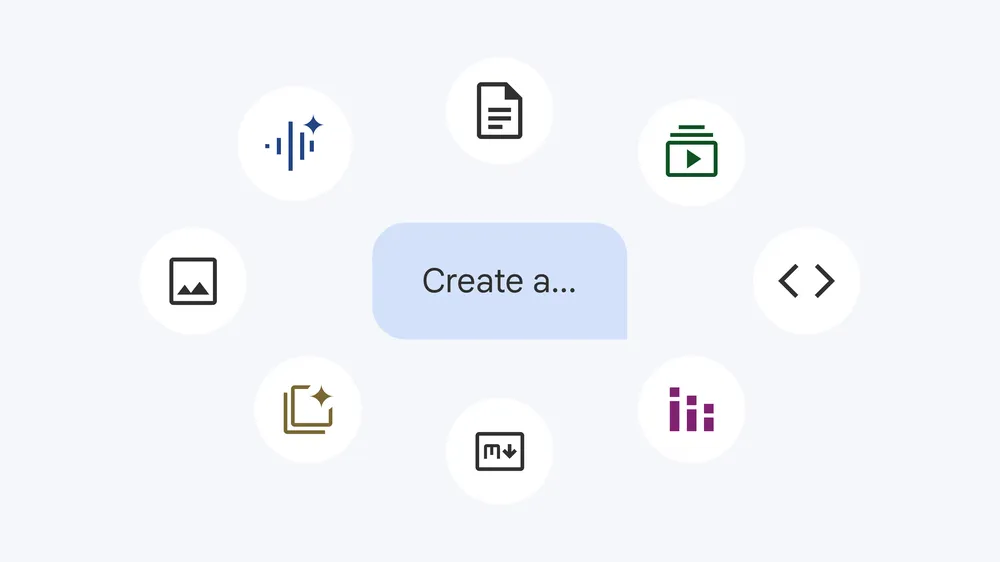
- New outputs include PDF, DOCX, XLSX, PPTX, CSV, JSON, Markdown, and PNG/SVG charts.
- It can search Google to find primary sources in multiple languages and build a repository for you.
- Rollout began June 8, 2026 for Google AI Ultra subscribers and eligible Workspace business customers, expanding globally over time.
What this means if you’re building
The cloud computer is the part to pay attention to. NotebookLM can now take a folder of sources, write Python against them, and hand back a budget spreadsheet, a chart, or a slide deck — work that used to require you to stand up a code-interpreter sandbox and wire it to a retrieval layer yourself.
For builders, that reframes the build-vs-buy line. If your product is “chat with the user’s documents and produce a deliverable,” NotebookLM now does the boring 80%: ingestion, retrieval, code execution, and export. The defensible work moves to the parts it doesn’t touch — your own data sources, domain-specific skills, permissions, and workflow integration.
Two caveats keep this honest. The win-rate numbers are Google’s own internal evaluations, not an independent benchmark, so treat 78.2% as a vendor claim. And access is gated behind AI Ultra and qualifying Workspace plans — this is not in the free tier yet.
It also lands the same week NotebookLM moved to Gemini 3.5 — the same model family powering Google Antigravity 2.0 and the Gemini 3.5 Flash API. If you’re standardizing on one model stack, Google is making the case that it spans the whole workflow.
Sources
- Do your best research with NotebookLM — Google Blog
- NotebookLM rolling out big Gemini 3.5 & Antigravity upgrade — 9to5Google
- NotebookLM’s new update will help you build source repository from chat — TechCrunch
Related on 7minAI: Gemini 3.5 Flash hands-on · How to use Gemini 3.5 Flash · Gemini Omni Flash
Source: Google Blog