Grok Bot found $100K in procurement savings — the agent design pattern matters more than the claim
xAI says its Grok Bot procurement agent identified more than $100,000 in savings. The reusable lesson for builders is a permissioned, evidence-first workflow where humans retain every binding decision.
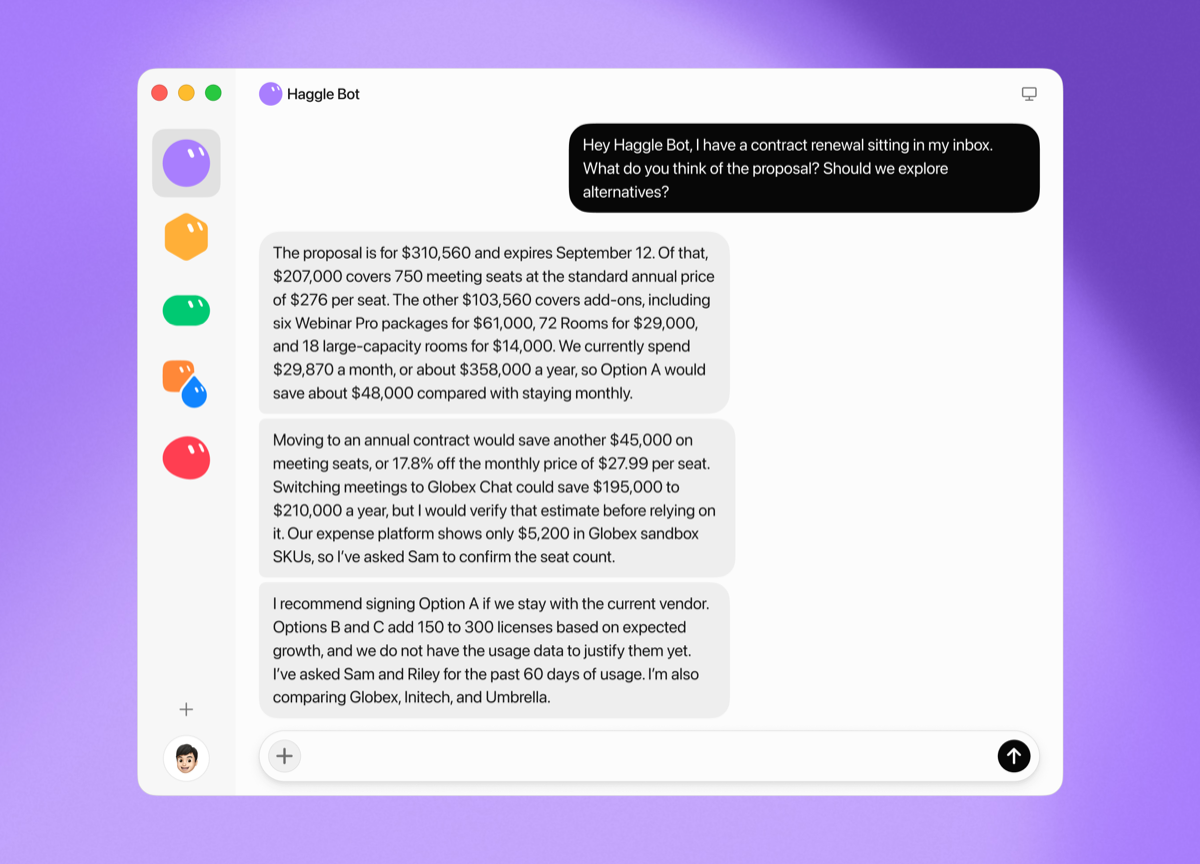
xAI published a September 4 case study about Haggle Bot, a Grok Bot configured to inspect vendor spend, contracts, and usage data. xAI says the Bot identified more than $100,000 in direct savings. That number is xAI’s own case-study claim, not an independently audited result. (Source: xAI, September 4, 2026)
Key facts:
- Haggle Bot was given access to Slack, Notion, Drive, Gmail, Hex, and Ramp. (Source: xAI, September 4, 2026)
- It built a map of roughly 125 active vendors. (Source: xAI, September 4, 2026)
- xAI reports that one audit found 43 inactive paid seats over a 90-day window, worth $14,220 in savings. (Source: xAI, September 4, 2026)
- xAI says a separate SaaS review found $85,662 per year in unused SKUs. (Source: xAI, September 4, 2026)
- Grok Bot for Enterprise is available to enterprise customers; xAI announced a two-week free-use period for Grok and Cursor Enterprise customers. (Source: xAI, September 3, 2026)
The interesting part is not that an agent can find unused licenses. A spreadsheet can expose that too. The useful pattern is that the Bot receives a standing job, cross-system read access, and explicit stop lines: it may research, ask colleagues for data, and prepare a negotiation; it may not buy, sign, accept terms, or send a vendor-facing message without approval.
What this means if you’re building with Grok
Treat the system prompt as a lightweight operating policy, not a clever prompt. xAI’s example asks the Bot to lead each finding with current spend, a realistic saving mechanism, one recommendation, and the next action already taken. It also requires live-source evidence and labels incomplete leads rather than letting the agent infer the missing data.
That is a more useful template for a persistent agent than “review our SaaS spend.” For your own agent, define four fields before you connect tools: the systems of record, the human owner, actions that are always allowed, and actions that require per-event approval. Keep contract signing, purchases, payment approval, and external sends on the approval side.
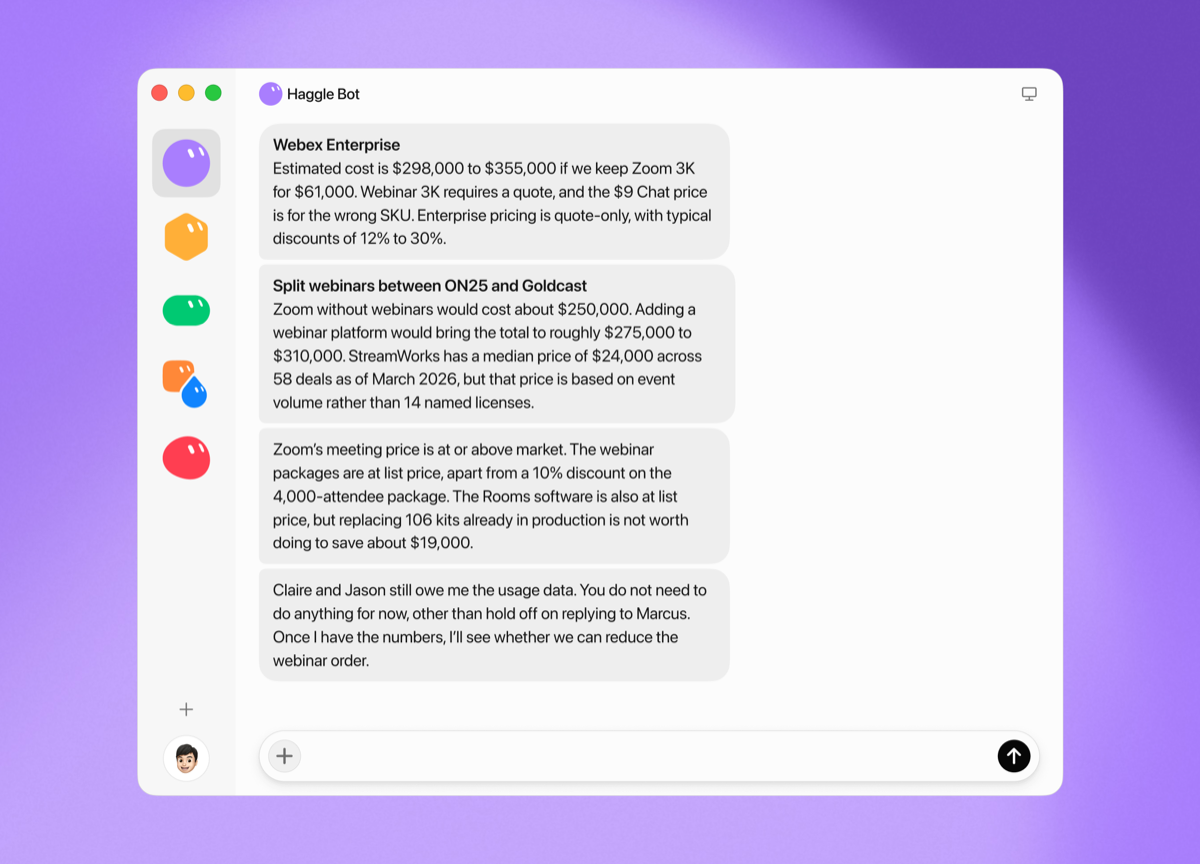
There is a crucial caveat: the savings, seat-usage findings, and negotiation results are all vendor-reported. They do not prove that the same setup will work in another company. Contract interpretation, identity permissions, data retention, and accidental vendor disclosure are real failure modes. xAI itself says it still revises external emails for tone and what information is safe to share.
If you want to build the same kind of persistent workflow for engineering instead of procurement, start with our Grok Build guide for the agent workflow, then use the Grok Build CLI setup to keep configuration and approval rules in the repository. xAI’s related design note also explains the underlying model: tools and Skills can be shared, while each Bot keeps its own memory and routines. (Source: xAI, September 3, 2026)
Sources
- xAI — Setting Grok Bot loose on procurement (September 4, 2026)
- xAI — Grok Bot for Enterprise (September 3, 2026)
- xAI — Designing Grok Bot for a world of persistent agents (September 3, 2026)
Source: xAI